Listen up, kitchen operatives. We are here to dismantle the myth that poultry excellence requires a six-hour commitment and a sink full of roasting pans. The objective is clear: a high-velocity, high-yield Sheet Pan Turkey Breast that defies the structural integrity of traditional dry, over-engineered holiday birds. We are targeting a specific moisture-to-protein ratio that ensures every fiber is saturated with lipids and aromatics. This is not just a meal; it is a tactical deployment of the Maillard reaction across a flat-plane surface. By utilizing a sheet pan, we maximize surface area exposure to convective heat, ensuring the skin achieves a glass-like shatter while the interior remains a pressurized reservoir of juice. Forget the bulky roasting racks that trap steam and turn skin into wet cardboard. We are opting for a streamlined, industrial approach where the vegetables act as a biological trivet, elevating the bird while they poach in the rendered schmaltz. This is culinary efficiency at its most aggressive.
THE DATA MATRIX
| Metric | Specification |
|---|---|
| Prep Time | 25 Minutes |
| Execution Time | 60 – 75 Minutes |
| Yield | 6 – 8 Servings |
| Complexity | 3 / 10 |
| Estimated Cost per Serving | $3.50 – $4.25 |
THE GATHERS
Ingredient Protocol:
- 1 Bone-in Turkey Breast (2.7kg / 6 lbs)
- 60ml / 4 tbsp Extra Virgin Olive Oil
- 56g / 4 tbsp Unsalted Butter, softened
- 15g / 1 tbsp Kosher Salt
- 5g / 1 tsp Cracked Black Peppercorns
- 450g / 1 lb Yukon Gold Potatoes, quartered
- 300g / 3 large Carrots, oblique cut
- 200g / 2 large Parsnips, battonet
- 10g / 4 sprigs Fresh Rosemary
- 10g / 6 sprigs Fresh Thyme
- 3g / 4 cloves Garlic, smashed
Section A: Ingredient Quality Audit:
If your turkey breast feels "spongy" or exudes excessive liquid upon opening, it has been pumped with a saline solution. To fix this, skip the additional salt in the rub and increase the air-drying time in the fridge to four hours. If your root vegetables are woody or lack sweetness, they are likely past their seasonal prime. To salvage them, toss them in a 15ml / 1 tbsp honey glaze before roasting to encourage caramelization and mask the fibrous texture. Never use dried herbs here; the volatile oils in fresh rosemary and thyme are essential to infuse the fat.
THE MASTERCLASS
1. Surface Prep and Desiccation
Pat the turkey breast completely dry using industrial-strength paper towels. Use a digital scale to measure out your salt and spices to ensure precise seasoning density. Rub the entire surface with a light coating of olive oil to act as a heat-conductive primer.
Pro Tip: Moisture is the enemy of the Maillard reaction. By removing surface water, you allow the thermal energy to immediately begin breaking down proteins and sugars rather than wasting energy on evaporation.
2. Compound Lipid Application
In a small bowl, combine the softened butter with minced herbs and garlic. Gently lift the skin from the breast meat and shove the butter mixture directly into the subcutaneous space. Use a bench scraper to clean your workstation of any stray herb debris.
Pro Tip: This creates a self-basting mechanism. As the butter melts, it will render out, frying the skin from the inside out while keeping the lean breast meat shielded from direct heat.
3. Structural Vegetable Foundation
Arrange your potatoes, carrots, and parsnips on a heavy-duty half-sheet pan. Season with salt and oil. Place the turkey breast directly on top of the vegetables. The vegetables should be crowded but in a single layer to ensure even roasting.
Pro Tip: The vegetables serve as a heat buffer. They prevent the bottom of the turkey from scorching while absorbing the viscous drippings, effectively braising in turkey fat.
4. Thermal Execution
Slide the pan into a preheated oven at 200C / 400F. Roast until a digital probe thermometer inserted into the thickest part of the breast registers 71C / 160F. Use a saucier to prepare any additional jus while the bird roasts.
Pro Tip: High-heat roasting at the start triggers rapid browning. The carry-over cooking will bring the internal temperature to the safe 74C / 165F mark during the rest phase.
5. The Mandatory Rest
Remove the pan from the oven and transfer the turkey to a cutting board. Let it rest for at least 15 minutes. Do not tent with foil, as this will trap steam and soften the crisp skin you worked so hard to achieve.
Pro Tip: Resting allows the muscle fibers to relax and reabsorb the internal juices. If you cut too soon, the pressure will force the moisture out, leaving you with a dry, fibrous result.
Section B: Prep & Timing Fault-Lines:
The most common failure is the "Cold Core" error. If you move the turkey directly from the fridge to the oven, the exterior will overcook before the center reaches safety. Temper the meat at room temperature for 30 minutes. If your timing is off and the vegetables are soft but the turkey is under-temp, remove the vegetables to a warm bowl and return the turkey to the oven alone to finish.
THE VISUAL SPECTRUM
Section C: Thermal & Visual Troubleshooting:
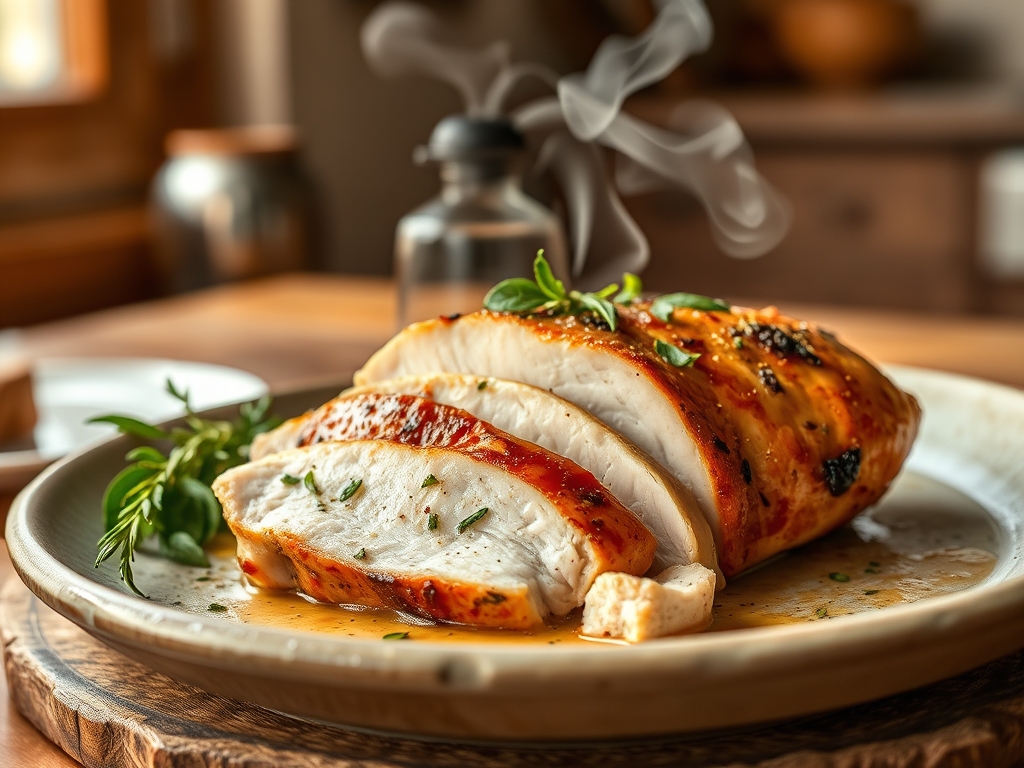
Look at the reference image. The skin should be a deep, mahogany gold, not a pale yellow. If your bird looks "patchy," your butter distribution was uneven. If the vegetables look shriveled rather than roasted, you likely cut them too small; they should be chunky enough to survive the 75-minute heat cycle. If the juices on the pan are burnt and black, you didn't use enough vegetables to shield the pan surface. Next time, add a splash of chicken stock to deglaze the pan halfway through.
THE DEEP DIVE
Macro Nutrition Profile
A standard 170g / 6oz serving of this turkey provides approximately 45g of protein, 12g of fat, and 0g of carbohydrates. The vegetable medley adds complex carbohydrates and fiber, making this a metabolically efficient fuel source.
Dietary Swaps
- Vegan: Replace the turkey with a large, scored cauliflower head and use vegan butter.
- Keto: Omit the potatoes and parsnips; replace them with radishes and cauliflower florets.
- GF: This recipe is naturally gluten-free as long as you avoid cross-contamination in your spice blends.
Meal Prep & Reheating Science
To maintain molecular structure during reheating, do not use a microwave. The localized agitation of water molecules will turn the protein rubbery. Instead, slice the turkey and place it in a pan with a tablespoon of water or stock. Cover tightly and heat in a 150C / 300F oven until just warm. This preserves the viscous mouthfeel of the fat.
THE KITCHEN TABLE
How do I know the turkey is done without a thermometer?
You don't. Guessing is for amateurs. If you must, pierce the thickest part; the juices must run completely clear with no hint of pink. But seriously, buy a digital probe.
Can I use a frozen turkey breast?
Yes, but it must be fully thawed in the refrigerator for 24 to 48 hours. Roasting from frozen will result in an outer layer of leather and a raw, icy core.
Why is my turkey skin rubbery?
You likely crowded the pan too much or didn't dry the skin properly. Steam is the enemy of crispness. Ensure there is enough airflow around the bird for the moisture to escape.
What if I want a more piquant flavor?
Add a teaspoon of smoked paprika or a pinch of cayenne to your butter rub. This adds a subtle heat and enhances the deep red hue of the finished skin.