Listen up, culinary engineers. If your morning routine currently involves a soggy pile of lukewarm tubers and rubbery whites, you are suffering from a systemic failure of infrastructure. We are not here to merely cook; we are here to construct a structural masterpiece of Maillard-driven crust and liquid gold centers. The One Skillet Egg Hash is the ultimate test of your kitchen's thermal management and mechanical efficiency. It requires a high-performance cast iron or carbon steel vessel to act as the foundation for a high-stakes chemical reaction. We are looking for that specific, shatteringly crisp exterior on every potato cube, contrasted against the viscous, velvet flow of a perfectly timed yolk. This is about more than just sustenance; it is about the physics of heat transfer and the precise timing of protein denaturation. If you can master the variables of moisture content and surface area, you will transform humble root vegetables into a high-octane fuel source that defies the mediocrity of standard breakfast fare. Prepare for a total system upgrade.
THE DATA MATRIX
| Metric | Specification |
|---|---|
| Prep Time | 15 Minutes |
| Execution Time | 25 Minutes |
| Yield | 4 Servings |
| Complexity (1-10) | 4 |
| Estimated Cost per Serving | $1.85 USD |
THE GATHERS
Ingredient Protocol:
- Russet Potatoes: 900g / 2 lbs (Peeled and cubed to 1.5cm).
- Yellow Onion: 150g / 1 medium (Finely diced).
- Bell Pepper: 150g / 1 large (De-seeded and diced).
- Garlic: 15g / 3 cloves (Minced).
- Large Eggs: 4 units (Room temperature).
- Smoked Paprika: 5ml / 1 tsp.
- Unsalted Butter: 30ml / 2 tbsp.
- Neutral Oil: 30ml / 2 tbsp (High smoke point).
- Fresh Chives: 15ml / 1 tbsp (Finely snipped).
- Kosher Salt: To taste.
- Black Pepper: To taste.
Section A: Ingredient Quality Audit:
If your potatoes feel soft or sprout-heavy, their starch-to-sugar ratio has shifted toward senescence. This results in poor browning and a gummy interior. To fix this, soak the cubes in cold, salted water for ten minutes to leach excess surface starch; then, use a clean kitchen towel to ensure they are bone dry before they hit the fat. If your eggs have thin, watery whites (indicative of age), they will spread too thin in the pan. Use a mesh strainer to drain the thin albumen before poaching them directly in the hash nests to maintain structural integrity.
THE MASTERCLASS
1. Thermal Priming and Tuber Deployment
Heat your heavy-bottomed skillet over medium-high heat. Add the neutral oil and allow it to reach its shimmering point. Introduce the potatoes in a single layer. Do not crowd the pan; if the surface area is insufficient, use a secondary vessel. Let them sit undisturbed for five minutes to initiate the Maillard reaction.
Pro Tip: Use a digital infrared thermometer to ensure the pan surface has reached 190C (375F). This temperature is the sweet spot for rapid moisture evaporation without burning the lipids.
2. Aromatic Infusion and Softening
Once the potatoes have developed a golden crust, use a bench scraper or metal spatula to flip them. Add the diced onions and peppers. Reduce the heat to medium. The moisture released from the vegetables will help deglaze the pan, pulling up those flavorful browned bits from the bottom.
Pro Tip: Add the butter at this stage. The milk solids in the butter will brown, creating a nutty aroma that will infuse the vegetables with a deeper flavor profile than oil alone can provide.
3. Spice Calibration and Well Construction
Stir in the garlic, smoked paprika, salt, and pepper. Cook for two minutes until the garlic is fragrant but not charred. Using the back of a large spoon, create four distinct "wells" or nests in the potato mixture. Ensure the bottom of the pan is visible in each well to allow for direct heat transfer to the egg whites.
Pro Tip: Use a digital scale to weigh your spices if you are scaling this recipe for a crowd. Precision in seasoning prevents the "piquant" notes of the paprika from overwhelming the delicate sweetness of the peppers.
4. The Protein Integration
Crack one egg into each well. Cover the skillet with a tight-fitting lid for three to four minutes. This traps the steam, allowing the whites to set while keeping the yolks viscous and runny. Monitor the opacity of the whites closely; they should be firm and white, not translucent.
Pro Tip: A saucier lid or any domed lid works best here. The dome shape encourages steam to circulate evenly, preventing the edges of the hash from drying out while the eggs poach.
5. Final Aeration and Garnish
Remove from heat immediately. Sprinkle with fresh chives and a final crack of black pepper. Use a spatula to lift the portions, ensuring each serving contains a nest of potatoes and a perfectly intact egg.
Pro Tip: High-quality offset spatulas allow for surgical precision when lifting the eggs, ensuring you do not rupture the yolk membrane before it reaches the plate.
Section B: Prep & Timing Fault-Lines:
The most common failure in One Skillet Egg Hash is the "Raw Core" syndrome. This occurs when the exterior of the potato burns before the interior softens. To avoid this, ensure your cubes are uniform in size. If you find the potatoes are browning too fast, add 15ml of water to the pan and cover it for two minutes; the steam will accelerate the internal cooking of the starch granules. Another fault-line is the "Rubbery Yolk." This is caused by residual heat. Remember that the eggs will continue to cook for 60 seconds after you remove the pan from the heat source. Pull the pan when the yolks still look slightly underdone.
THE VISUAL SPECTRUM
Section C: Thermal & Visual Troubleshooting:
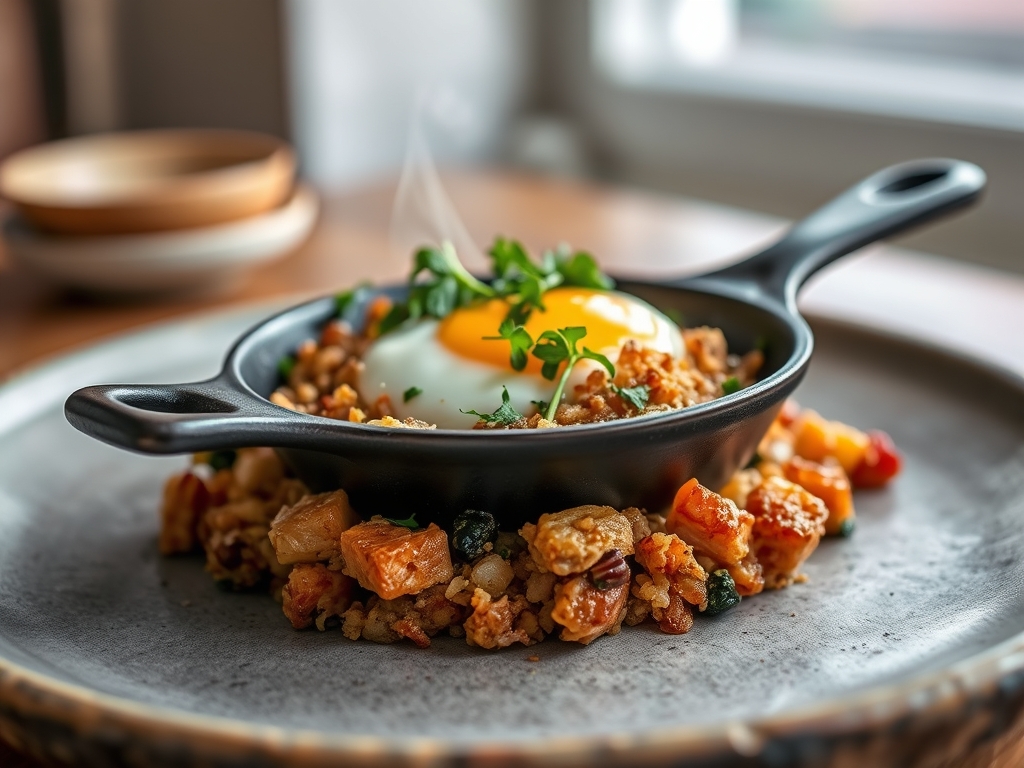
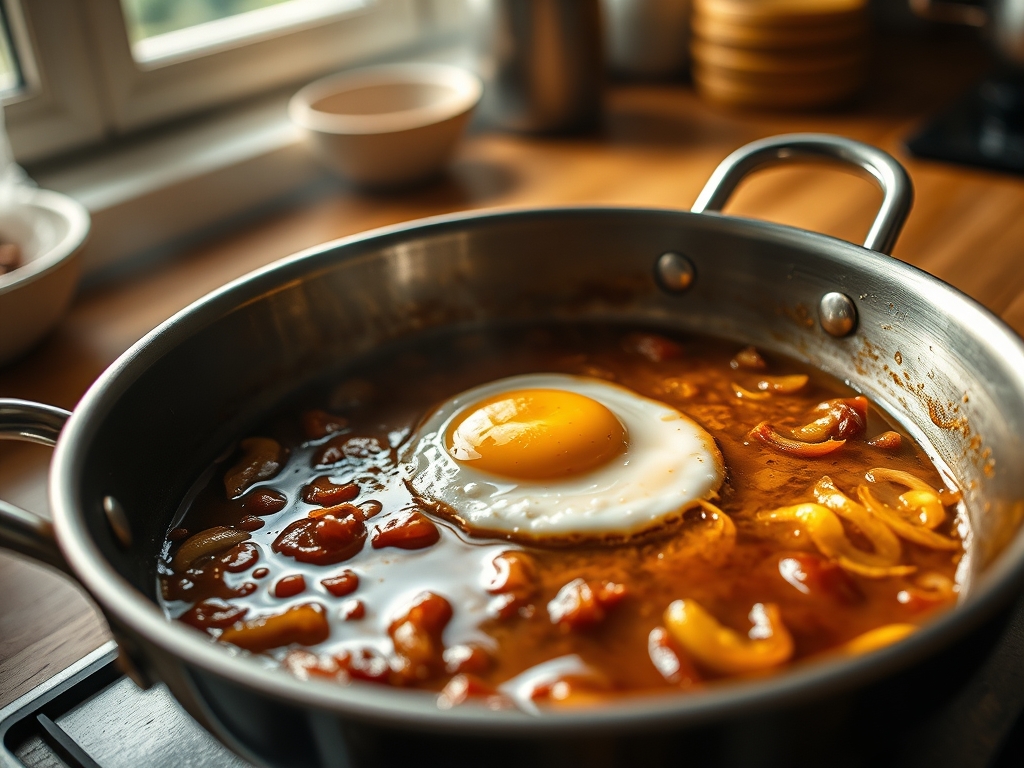
Referencing the Masterclass photo, your hash should exhibit a high-contrast color palette. If your dish looks monochromatic and pale, you likely moved the potatoes too early; they need "still time" to develop that deep mahogany brown. If the eggs look "matte" or dusty, they are overcooked. A perfect egg has a glossy, reflective surface on the yolk. If your peppers look grey or mushy, they were added too early in the process. They should retain a vibrant saturation, indicating that their cellular structure hasn't completely collapsed under the heat.
THE DEEP DIVE
Macro Nutrition Profile:
A standard serving provides approximately 320 calories, 14g of protein, 35g of carbohydrates, and 16g of healthy fats. The Russet potatoes provide a significant dose of potassium and Vitamin C, while the eggs deliver high-bioavailability protein and choline.
Dietary Swaps:
- Vegan: Replace eggs with a seasoned silken tofu scramble or a commercial plant-based egg substitute. Swap butter for avocado oil.
- Keto: Replace potatoes with cubed cauliflower or radishes. Radishes, when roasted, lose their peppery bite and mimic the texture of a potato remarkably well.
- GF: This recipe is naturally gluten-free; just ensure your smoked paprika is not processed in a facility with wheat.
Meal Prep & Reheating Science:
To maintain molecular structure during reheating, avoid the microwave. The microwave agitates water molecules, which will turn your crisp potatoes into a soggy mess and overcook the egg yolks into a chalky consistency. Instead, reheat the hash in a dry skillet over medium heat. If you must prep ahead, cook the potato base entirely but wait to add the eggs until you are ready to serve.
THE KITCHEN TABLE
Why are my potatoes sticking to the skillet?
Your pan was likely not hot enough before adding the oil, or you attempted to flip the potatoes before the crust had fully formed. Protein and starch will naturally release from the metal once the Maillard reaction is complete.
Can I use waxy potatoes like Red Bliss?
You can, but the texture will be different. Waxy potatoes hold their shape better but do not achieve the same fluffy interior as starchy Russets. They will result in a firmer, more "toothsome" hash.
How do I prevent the garlic from burning?
Always add garlic during the final stages of the vegetable sauté. Garlic has a high sugar content and a low burn point; it only needs about 60 to 90 seconds of heat to release its aromatics.
What is the best way to clean the pan afterward?
While the pan is still warm, use a chainmail scrubber or a stiff brush with hot water. Avoid harsh detergents on seasoned cast iron to preserve the non-stick polymer layer you have built up.