Stop treating your kitchen like a hobbyist playground and start treating it like a high-output laboratory. We are not just making dinner; we are managing a complex thermodynamic event where conductive heat meets muscle fiber. The Sheet Pan Steak Audit demands total control over your environment to ensure that a humble flank steak achieves the same crust-to-interior ratio as a high-end chophouse cut. Most home cooks fail because they underestimate the physics of moisture. If your steak is gray and sad, you did not cook it; you steamed it in its own despair. We are here to rectify that through rigid structural discipline. By leveraging a high-surface-area sheet pan, we maximize the Maillard reaction across the entire topography of the protein. This audit will dissect the variables of temperature, surface tension, and enzymatic breakdown. Put down the dull knife and pick up a digital scale. It is time to audit your infrastructure and transform a simple sheet pan into a high-performance searing engine.
THE DATA MATRIX
| Variable | Metric |
|---|---|
| Prep Time | 20 Minutes |
| Execution Time | 12 Minutes |
| Yield | 4 Servings |
| Complexity (1-10) | 4 |
| Estimated Cost per Serving | $7.50 USD |
THE GATHERS
Ingredient Protocol:
- Flank Steak: 900g / 2 lbs (Ensure it is room temperature).
- Bell Peppers: 3 Large / 450g (Tri-color for visual spectrum).
- Red Onion: 1 Large / 150g (Sliced into 1cm petals).
- Extra Virgin Olive Oil: 60ml / 0.25 cup (High smoke point preferred).
- Kosher Salt: 15g / 1 tbsp (Diamond Crystal preferred).
- Black Pepper: 5g / 1 tsp (Freshly cracked).
- Garlic Powder: 5g / 1 tsp (For uniform distribution).
- Smoked Paprika: 5g / 1 tsp (To infuse a deep profile).
- Balsamic Glaze: 30ml / 2 tbsp (For a viscous, piquant finish).
Section A: Ingredient Quality Audit:
If your steak feels slimy or has a dull gray hue before cooking, the cellular integrity is compromised. A "wet" steak will never sear; it will only boil. Technical fix: Pat the protein dry with lint-free towels and salt it 40 minutes prior to cooking. This allows the salt to draw out moisture, dissolve into a brine, and then be reabsorbed into the fibers via osmosis. If your peppers are flaccid, they lack the turgor pressure necessary for a crisp finish. Shock them in an ice bath for ten minutes before slicing to restore their structural rigidity.
THE MASTERCLASS
1. Thermal Pre-Loading
Preheat your oven to 232C / 450F and place your heavy-duty rimmed baking sheet inside while it heats. This turns the pan into a heat sink. By the time the steak hits the metal, the conduction starts immediately rather than waiting for the air to circulate.
Pro Tip: Use a digital infrared thermometer to ensure the pan surface has reached at least 220C before adding ingredients. This ensures an immediate render of surface fats.
2. The Emulsion Interface
In a stainless steel saucier, whisk your oil, salt, pepper, and spices. We are creating a temporary suspension to coat the vegetables. Toss the sliced peppers and onions in this mixture until every square millimeter is glistening.
Pro Tip: Use a bench scraper to move your chopped vegetables from the cutting board to the bowl. It prevents "bruising" the cell walls of the onions, which keeps their flavor sharp rather than sulfurous.
3. Structural Alignment
Carefully remove the hot pan. Arrange the vegetables in a single layer around the perimeter, leaving a dedicated "kill zone" in the center for the steak. Place the flank steak directly onto the hot steel. You should hear a violent hiss; that is the sound of success.
Pro Tip: Use a digital scale to ensure your vegetable portions are equal. Uneven cuts lead to uneven roasting, resulting in some pieces being charred while others remain raw.
4. The Conductive Blast
Slide the pan into the top third of the oven. The proximity to the heating element facilitates radiant heat, while the pan provides direct conduction. Flip the steak halfway through the 10 to 12 minute window.
Pro Tip: Do not rely on a clock. Use a probe thermometer to pull the steak when it hits 52C / 125F for a perfect medium-rare. The carryover heat will bring it to the finish line.
5. The Molecular Rest
Transfer the steak to a wooden board. Do not touch it for 10 minutes. This allows the muscle fibers to relax and reabsorb the internal juices. If you cut it now, the internal pressure will force all the flavor onto the board.
Pro Tip: Use a microplane to grate fresh zest or hard cheese over the resting steak to aerate the aromatics and add a final layer of complexity.
Section B: Prep & Timing Fault-Lines:
The most common human error in this audit is "crowding the pan." If the vegetables are touching the steak, they release steam that prevents the steak from browning. Ensure at least a 2cm "buffer zone" around the protein. Another fault-line is the "cold start." If the steak is pulled directly from the refrigerator, the center will remain raw while the exterior overcooks. Always allow the protein to reach ambient temperature for at least 30 minutes.
THE VISUAL SPECTRUM
Section C: Thermal & Visual Troubleshooting:
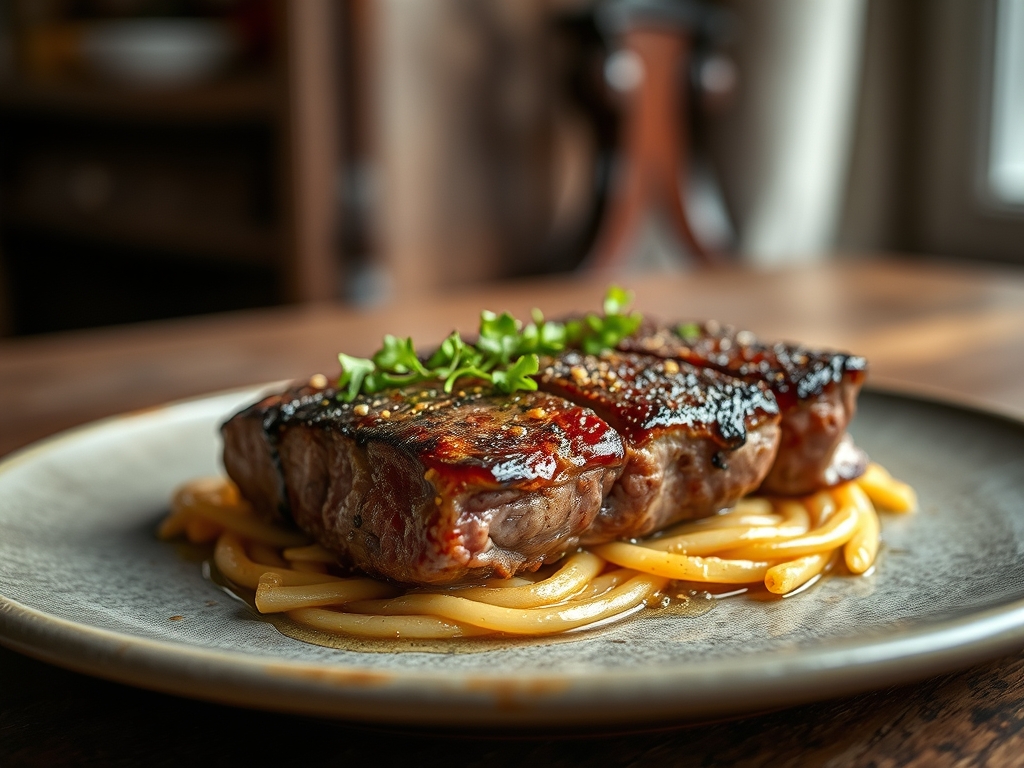
Referencing the Masterclass photo, look for the "Char-Gradient." The peppers should have blackened edges, indicating the sugars have caramelized. If your vegetables look pale and soggy, your oven temperature was too low or you used too much oil. The steak should have a mahogany crust. If it looks "wet" and gray, you failed to pat it dry or the pan wasn't preheated. To fix a dull appearance, deglaze the pan with a splash of citrus or vinegar and toss the vegetables in the resulting jus to add a glossy, professional sheen.
THE DEEP DIVE
Macro Nutrition Profile:
A standard serving provides approximately 35g of Protein, 18g of Fat, and 12g of Carbohydrates. This is a high-density, low-glycemic fuel source designed for metabolic efficiency.
Dietary Swaps:
- Vegan: Replace the flank steak with thick-cut "steaks" of cauliflower or lion's mane mushrooms. Increase the oil slightly to compensate for the lack of animal fat.
- Keto: Eliminate the balsamic glaze and ensure the rub is sugar-free.
- GF: This protocol is naturally gluten-free; just ensure your spices are not processed with wheat-based anti-caking agents.
Meal Prep & Reheating Science:
To maintain the molecular structure during reheating, avoid the microwave. The microwave agitates water molecules, which toughens the protein. Instead, use a low-temperature oven (120C / 250F) or a quick flash-sear in a cast iron pan to revive the crust without overcooking the core.
THE KITCHEN TABLE
Why is my flank steak tough?
You likely sliced it with the grain. Always slice perpendicular to the long muscle fibers. This shortens the fibers, making the meat easier to chew and improving the overall mouthfeel of the dish.
Can I use a glass baking dish?
No. Glass is an insulator, not a conductor. You will not achieve the necessary Maillard reaction. Use a heavy-gauge aluminum or carbon steel sheet pan for maximum thermal transfer and consistent browning across the steak surface.
How do I get more flavor into the meat?
Increase the surface area for the rub. Use a fork to lightly score the surface of the steak before applying your spice protocol. This allows the salt and aromatics to penetrate deeper into the primary muscle groups.
What if I want my vegetables softer?
Start the vegetables five minutes before adding the steak. This gives the fibrous peppers more time to break down their cellulose structures while ensuring the steak does not overcook during the extended thermal exposure.