Forget the humble saucepan with its sharp, 90 degree corners where flour goes to die and whisk wires cannot reach. If you are serious about the physics of flavor, you must embrace the curved geometry of the saucier. We are not just heating liquid; we are engaging in a high stakes maneuver known as Saucier Emulsification. This is the art of forcing fat and water into a permanent, velvety truce through kinetic energy and thermal precision. Imagine a pan where the whisk glides effortlessly along a continuous radius, ensuring no pocket of starch remains unhydrated and no bead of butter escapes the vortex. The result is a sauce so stable it defies gravity and so glossy it reflects your own triumphant expression. We are talking about a texture that is viscous enough to coat a spoon but light enough to aerate upon contact with the palate. This audit examines the foundational mechanics of a classic Beurre Rouge; a piquant, wine based emulsion that demands absolute control over fluid dynamics to achieve culinary perfection.
THE DATA MATRIX
| Metric | Specification |
|---|---|
| Prep Time | 15 Minutes |
| Execution Time | 25 Minutes |
| Yield | 350ml / 1.5 Cups |
| Complexity (1-10) | 7 |
| Estimated Cost per Serving | $1.45 |
THE GATHERS
Ingredient Protocol:
- 240ml / 1 cup Dry Red Wine (Cabernet or Pinot Noir)
- 60ml / 0.25 cup Red Wine Vinegar
- 45g / 3 tbsp Finely Minced Shallots
- 225g / 2 sticks Unsalted European Butter (Chilled and Cubed)
- 5ml / 1 tsp Whole Black Peppercorns (Cracked)
- 2g / 0.5 tsp Kosher Salt
- 15ml / 1 tbsp Heavy Cream (Optional stabilizer)
Section A: Ingredient Quality Audit:
The most common failure point in Saucier Emulsification is the use of low quality, high water content butter. If your butter contains too much moisture, the emulsion will collapse into a greasy puddle. Technical Fix: Source European style butter with at least 82 percent butterfat. If the wine tastes like "cork" or vinegar before you start, the heat will only concentrate those flaws. Always use a wine you would actually drink. If your shallots are sprouting green centers, remove them; those sprouts contain bitter compounds that will ruin the delicate balance of the reduction.
THE MASTERCLASS
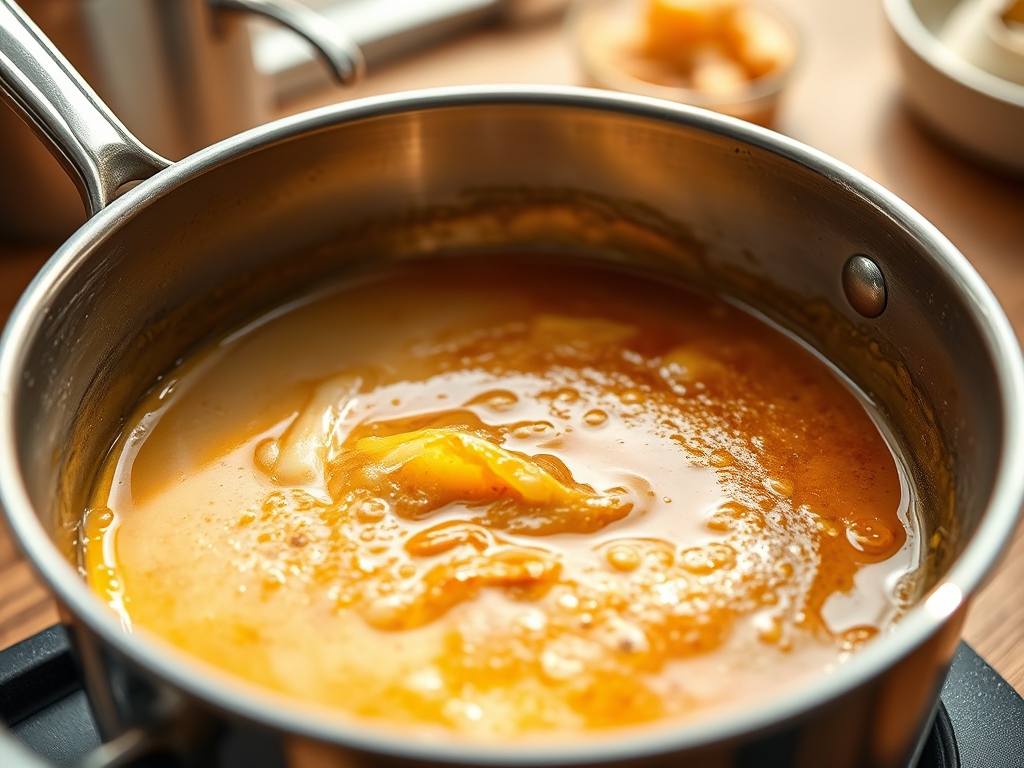
1. The Aromatic Reduction
Combine the wine, vinegar, shallots, and peppercorns in your saucier. Place it over medium high heat and bring the liquid to a steady simmer. You are looking to render the shallots translucent while concentrating the acids and sugars. Reduce the liquid until it reaches a syrupy consistency, roughly 30ml / 2 tablespoons.
Pro Tip: The curved walls of the saucier increase the surface area of the liquid as it reduces. This accelerates evaporation while preventing the edges from scorching. Use a digital scale to weigh your pan before and after to ensure you have hit the precise reduction target.
2. The Temperature Calibration
Once the reduction is complete, lower the heat to the absolute minimum. If the pan is too hot, the butter will melt too quickly and the milk solids will separate from the fat. This is where most amateur cooks fail. The goal is to maintain a temperature between 110F and 130F (43C to 54C).
Pro Tip: Professional chefs often use the "off and on" method. Move the saucier off the burner entirely to whisk in the butter; then return it briefly to maintain the temperature. A digital infrared thermometer is an essential tool here to monitor the thermal floor.
3. Kinetic Integration
Add the chilled butter one cube at a time. Use a balloon whisk to vigorously aerate the mixture. The motion should be a rapid figure eight, utilizing the saucier's rounded base to ensure the butter is instantly incorporated into the wine reduction. The sauce will begin to turn opaque and pale pink.
Pro Tip: This is the moment of Saucier Emulsification. The cold butter acts as its own cooling agent, preventing the sauce from breaking. The mechanical action of the whisk breaks the fat into microscopic droplets that are suspended in the wine reduction.
4. The Final Refinement
Once all the butter is incorporated, season with salt. Strain the sauce through a fine mesh conical strainer (chinois) into a clean vessel. Use a bench scraper to clean any remaining shallots from the pan to ensure every drop of the liquid gold is captured.
Pro Tip: Straining is not just about removing solids; it is the final step in homogenization. It forces the emulsion through a tight mesh, ensuring a perfectly smooth, viscous mouthfeel that defines professional saucier work.
Section B: Prep & Timing Fault-Lines:
Timing is the silent killer. If you mince your shallots too early, they oxidize. If you cube your butter and leave it on the counter, it loses the "cold shock" necessary for a stable emulsion. The Fix: Mise en place is non negotiable. Have your butter cubed and returning to the refrigerator until the exact moment the reduction is ready. If the sauce breaks (looks oily), whisk in a teaspoon of cold heavy cream or a splash of water immediately to re-emulsify the fats.
THE VISUAL SPECTRUM
Section C: Thermal & Visual Troubleshooting:
Look closely at the Masterclass photo. The sauce should possess a "nappe" consistency, meaning it coats the back of a spoon with a mirror like sheen. If your sauce looks dull or matte, it is likely under emulsified; increase your whisking speed. If you see tiny yellow beads of fat on the surface, the temperature has exceeded 145F (63C) and the emulsion is fracturing. The Visual Cue: A perfect Beurre Rouge should have a vibrant, satin finish with no visible separation. If the color is too dark, you over reduced the wine; if it is too pale, you likely added the butter too quickly without enough agitation.
THE DEEP DIVE
Macro Nutrition Profile:
This sauce is a lipid heavy luxury. A standard 30ml serving contains approximately 200 calories, 22g of fat, 1g of carbohydrates, and 0g of protein. It is a high density flavor delivery system intended for moderation.
Dietary Swaps:
- Vegan: Substitute the butter with high quality vegan buttery sticks (oil based) and use a touch of lecithin powder to assist the emulsion.
- Keto: This recipe is naturally keto friendly as it relies on high fat and minimal sugar from the wine reduction.
- GF: Naturally gluten free; no flour based roux is used in this method.
Meal Prep & Reheating Science:
Emulsions are notoriously fragile. To reheat, do not use a microwave; the uneven radiation will shatter the molecular bonds instantly. Instead, use a double boiler (bain marie) over gentle steam. Whisk constantly as it warms to re-engage the Saucier Emulsification. If storing, keep it in a thermos to maintain the "working temperature" for up to two hours.
THE KITCHEN TABLE
Why does my sauce look broken and oily?
Your temperature likely spiked too high, causing the butterfat to separate from the milk solids. To fix this, whisk in a tablespoon of cold water or cream off the heat until the mixture tightens and regains its creamy sheen.
Can I use a regular saucepan instead?
You can, but you risk "dead zones" in the corners where the whisk cannot reach. This leads to uneven heating and pockets of un-emulsified fat. The saucier's curved base is engineered specifically to prevent this mechanical failure.
What is the purpose of the heavy cream?
While traditionalists might scoff, a tablespoon of heavy cream provides extra proteins and phospholipids. These act as stabilizers that make the emulsion much more forgiving and less likely to break during service or reheating.
How long will this sauce hold its structure?
A well executed emulsion will hold for about 30 to 60 minutes in a warm spot. For longer durations, use a vacuum insulated carafe. Never boil the sauce after the butter is added, or the structure will vanish.