Listen up, kitchen architects. We are not merely tossing tubers into a box and hoping for the best. We are constructing a foundation of complex carbohydrates designed to survive the rigors of the weekly grind. When you handle a Prepared Sweet Potato, you are managing a biological vessel of starch and sugar that is prone to structural collapse if the thermal variables are mismanaged. The goal here is a specific textural duality: a caramelized, resilient exterior that yields to a velvet, maltose-rich interior. This is the infrastructure of flavor. We are looking for that specific Maillard reaction that transforms simple sugars into a complex, savory-sweet profile. Forget those soggy, steamed cubes found in depressing plastic bins. We are building a high-performance fuel source that retains its integrity from the first roast to the final reheat on a Thursday afternoon. It requires precision, heat management, and a refusal to settle for mediocre produce. Let us audit your process and upgrade your culinary hardware.
THE DATA MATRIX
| Metric | Specification |
|---|---|
| Prep Time | 15 Minutes |
| Execution Time | 35 to 45 Minutes |
| Yield | 6 to 8 Servings |
| Complexity (1-10) | 3 |
| Estimated Cost per Serving | $0.85 USD |
THE GATHERS
Ingredient Protocol:
- 1.8 kg / 4 lbs Garnet or Jewel Sweet Potatoes (firm, no soft spots)
- 60 ml / 4 tbsp High-Smoke Point Oil (Avocado or Grapeseed)
- 10 g / 2 tsp Diamond Crystal Kosher Salt
- 5 g / 1 tsp Smoked Paprika (for piquant depth)
- 2 g / 0.5 tsp Freshly Ground Black Pepper
- 15 ml / 1 tbsp Maple Syrup (optional, to accelerate caramelization)
Section A: Ingredient Quality Audit:
If your raw tubers feel spongy or exhibit "pithy" centers, your infrastructure is compromised before you even preheat. Sponginess indicates moisture loss and starch conversion that has gone too far; these will never achieve a creamy interior. To fix a dry batch, you must infuse moisture during the roasting process by adding a small tray of water to the bottom rack of the oven to create a humid environment. If your potatoes are leaking a milky sap when cut, congratulations; that is high starch content, which is the gold standard for a Prepared Sweet Potato. If the skins are bruised, peel them entirely to avoid bitter, oxidized notes.
THE MASTERCLASS
Step 1: The Calibrated Cubing
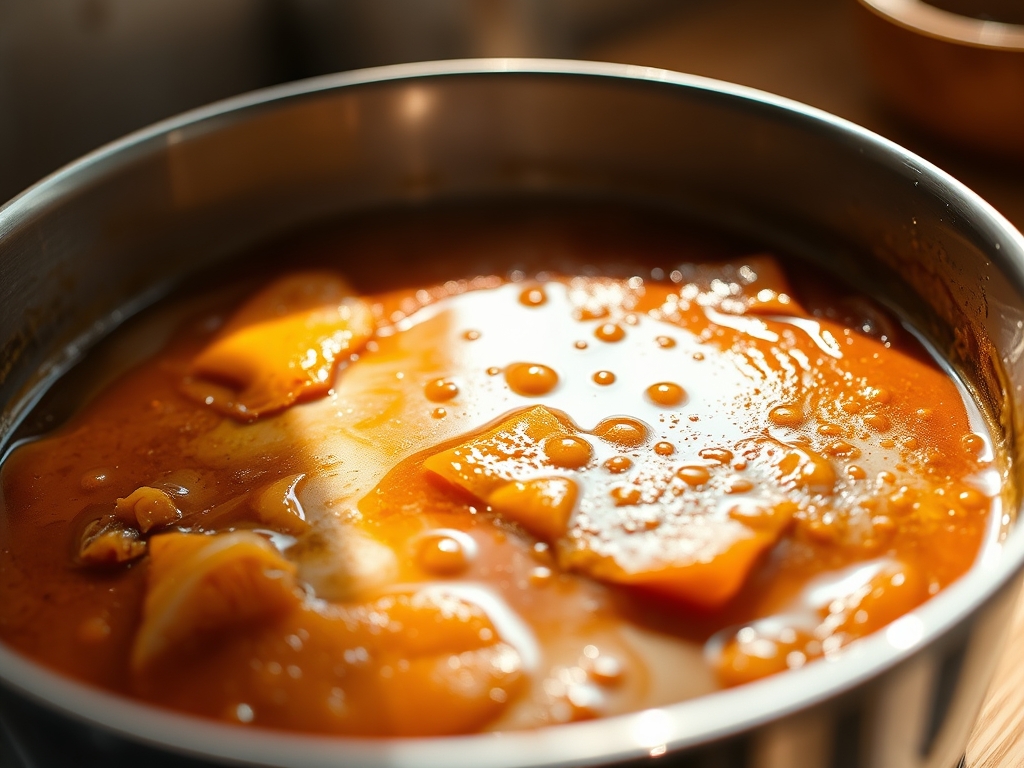
Using a sharpened chef knife or a heavy-duty mandoline, reduce your tubers into uniform 2.5 cm / 1 inch cubes. Consistency is the primary law of thermal dynamics in a convection environment. If your sizes vary, the small units will render into carbon while the large units remain crunchily raw.
Pro Tip: Use a digital scale to ensure your total batch weight matches your oil ratio. A ratio of 15ml oil per 450g of potato ensures every surface area is coated without becoming viscous or greasy.
Step 2: The Emulsion Coating
In a large stainless steel mixing bowl, combine the oil, salt, and spices. Toss the cubes vigorously. You want to see a shimmering, orange-hued coating on every facet of the potato. This is not just for flavor; the oil acts as a heat conductor to ensure the exterior reaches the 140 Celsius threshold required for the Maillard reaction.
Pro Tip: Use a bench scraper to transfer the seasoned potatoes to your baking sheet. This prevents leaving the essential salt and spice slurry behind in the bowl.
Step 3: The Strategic Spacing
Arrange the cubes on a heavy-gauge half-sheet pan lined with parchment paper. Do not crowd the infrastructure. If the potatoes are touching, they will trap steam, leading to a structural failure known as "the mush factor." There should be at least 1 cm of airspace between each unit.
Pro Tip: A heavy aluminum baking sheet is superior to thin steel; it distributes heat evenly and prevents "hot spots" that cause localized burning.
Step 4: The Thermal Blast
Slide the tray into a preheated 218 Celsius / 425 Fahrenheit oven. Roast for 20 minutes, then use a wide metal spatula to flip the cubes. This redistributes the oil and ensures the side in contact with the pan does not over-caramelize.
Pro Tip: Use an infrared thermometer to check the pan surface. You want the surface to be screaming hot to ensure the sugars infuse with the smoky paprika notes immediately upon contact.
Section B: Prep & Timing Fault-Lines:
The most common human error is the "Cold Start" fallacy. If you put the potatoes in before the oven reaches the target temperature, the starch granules swell slowly rather than dehydrating quickly. This results in a gummy texture. Always use an oven thermometer to verify your internal temp. Another fault-line is the "Over-Crowd." If you have too many potatoes for one pan, use two pans on separate racks and rotate them halfway through. Efficiency should never come at the cost of airflow.
THE VISUAL SPECTRUM
Section C: Thermal & Visual Troubleshooting:
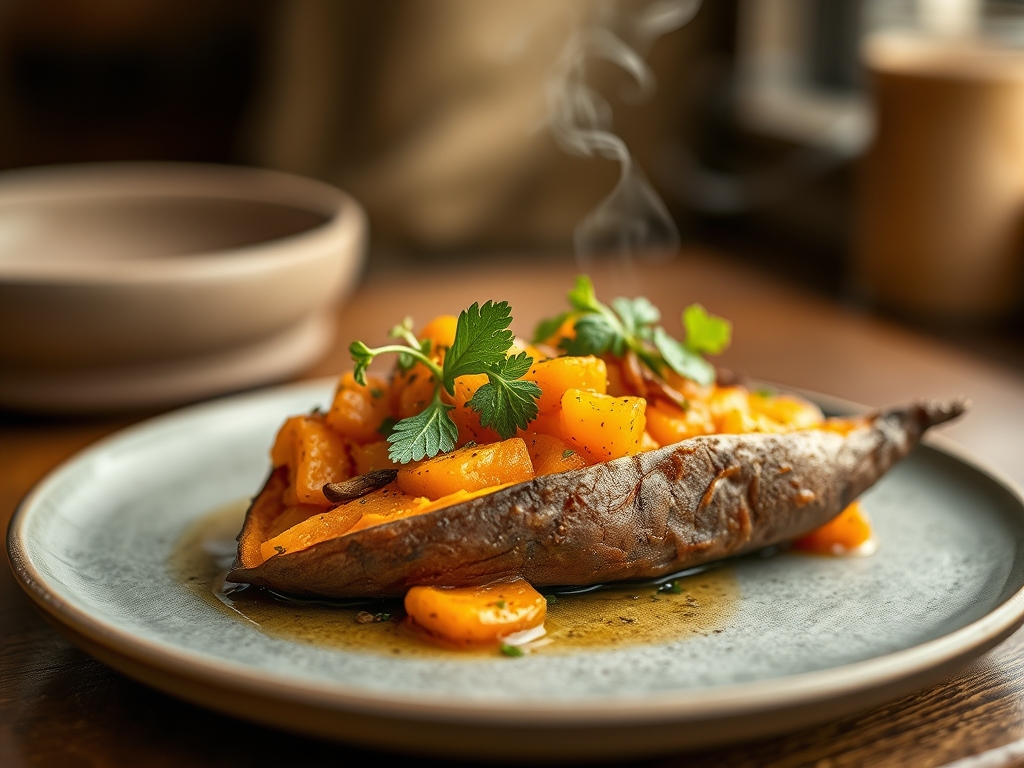
Referencing the Masterclass photo, your Prepared Sweet Potato should exhibit "blistered" edges. This is a visual cue that the exterior sugars have crystallized. If your potatoes look dull or matte, you likely under-salted or under-oiled them; salt draws out the moisture needed to create that glossy finish. If the edges are black but the centers are hard, your oven floor is too hot; move the rack up one level. If the potatoes look shriveled, you roasted them too long at too low a temperature, causing total dehydration of the cellular walls. The ideal result is a vibrant, saturated orange with localized "char" spots that provide a bitter contrast to the maltose sweetness.
THE DEEP DIVE
Macro Nutrition Profile:
A standard 150g serving of this Prepared Sweet Potato provides approximately 140 calories, 3g of fiber, and over 300% of your daily Vitamin A. The inclusion of healthy fats (avocado oil) is critical here, as Vitamin A is fat-soluble; without the oil, your body cannot efficiently absorb the nutrients.
Dietary Swaps:
For a Vegan profile, ensure your maple syrup is organic and avoid any honey-based glazes. For a Keto-adjacent modification (though sweet potatoes are high-carb), reduce the portion size and increase the fat ratio by finishing with a drizzle of tahini to slow the glycemic response. This recipe is naturally Gluten-Free, provided your spice blends are not bulked with flour-based anti-caking agents.
Meal Prep & Reheating Science:
To maintain molecular structure, cool the potatoes completely on the tray before transferring to an airtight glass container. This prevents "carry-over steaming" which softens the crust. When reheating, avoid the microwave; it agitates water molecules and turns the potato into a sponge. Instead, use an air fryer or a dry skillet to deglaze the exterior and restore the crispness.
THE KITCHEN TABLE
Why are my sweet potatoes soggy after roasting?
You likely overcrowded the pan or used too much oil. Steam trapped between the cubes prevents the crust from forming. Ensure at least 1 cm of space between each piece for maximum airflow and crisping.
Can I leave the skins on for meal prep?
Absolutely. The skins provide structural integrity and additional fiber. Just ensure you scrub them with a vegetable brush to remove any grit before dicing. The skin also helps the cube hold its shape during reheating.
What is the best oil for high-heat roasting?
Use avocado or grapeseed oil. These have high smoke points (above 200 Celsius). Avoid extra virgin olive oil for this specific high-heat application, as it can break down and produce acrid, bitter flavors at 218 Celsius.
How long do these stay fresh in the fridge?
When stored in an airtight glass container, they maintain peak structural integrity for 5 to 6 days. For best results, reheat them in a toaster oven to re-crisp the edges rather than using a microwave.