Listen up, flavor architects. We are currently standing at the intersection of structural integrity and high-heat thermodynamics. If your previous attempts at Sheet Pan Tofu have resulted in a collection of sad, rubbery sponges that lack soul and structural defiance, consider this your formal intervention. We are not just cooking; we are conducting a high-stakes audit of surface area and moisture evaporation. The goal is simple but the physics are demanding. We want a shatter-crisp exterior that gives way to a creamy, custard-like interior. This requires more than just hope; it requires a deep understanding of the Maillard reaction and the strategic deployment of dry heat. We are going to treat every cube of soy protein like a piece of prime real estate. By the time we are done, you will have mastered the art of the sheet pan, turning a humble block of curds into a gold-standard benchmark of plant-based texture. Let us strip away the fluff and get down to the molecular brass tacks of the perfect roast.
THE DATA MATRIX
| Metric | Specification |
|---|---|
| Prep Time | 15 Minutes |
| Execution Time | 25 Minutes |
| Yield | 4 Servings |
| Complexity (1-10) | 3 |
| Estimated Cost per Serving | $1.85 USD |
THE GATHERS
Ingredient Protocol:
- 450g / 16 oz Extra-Firm Tofu (Pressed and cubed)
- 30ml / 2 tbsp Extra Virgin Olive Oil or Neutral Grapeseed Oil
- 15g / 2 tbsp Cornstarch or Arrowroot Powder
- 5g / 1 tsp Smoked Paprika
- 3g / 0.5 tsp Garlic Powder
- 2g / 0.25 tsp Fine Sea Salt
- 1g / 0.25 tsp Freshly Cracked Black Pepper
- 15ml / 1 tbsp Low-Sodium Soy Sauce or Tamari
- 5ml / 1 tsp Toasted Sesame Oil (to infuse at the finish)
Section A: Ingredient Quality Audit:
The primary failure point in most tofu operations is the water-to-protein ratio. If you purchase "Firm" tofu instead of "Extra-Firm," you are fighting a losing battle against steam. Technical fix: Wrap the block in lint-free towels and apply a five-pound weight for twenty minutes to render out excess moisture. If your cornstarch feels gritty or clumped, it has likely absorbed ambient humidity; sift it through a fine-mesh strainer to ensure it can properly aerate and coat the protein. Lastly, ensure your soy sauce is not a "dark" variety for this specific application, as the high sugar content in dark soy will scorch before the tofu reaches peak crispness.
THE MASTERCLASS
1. The Geometry of the Cut
Precision is the foundation of consistency. Use a sharp chef knife and a digital scale to ensure your cubes are exactly 2cm on all sides. Uniformity ensures that every piece reaches the thermal finish line at the same millisecond.
Pro Tip: Use a bench scraper to move your cubes from the cutting board to the mixing bowl. This prevents the structural degradation of the tofu edges, maintaining the sharp corners necessary for maximum surface area contact with the pan.
2. The Starch Encapsulation
In a large stainless steel bowl, toss the tofu with the oil and soy sauce until a viscous film forms. Sift the cornstarch and spices over the top. Toss with a silicone spatula until each cube is matte and fully coated.
Pro Tip: The cornstarch creates a sacrificial barrier that dehydrates rapidly in the oven. This creates a micro-textured surface that traps oil, leading to an accelerated Maillard reaction and a crunch that mimics deep-frying without the lipid saturation.
3. Thermal Distribution and Spacing
Preheat your oven to 220C / 425F. Arrange the tofu on a heavy-gauge rimmed baking sheet. Do not crowd the pan. If the cubes are touching, they will steam each other, resulting in a flaccid texture.
Pro Tip: Use a heavy carbon steel or aluminum sheet pan. These materials have superior heat conductivity compared to glass or ceramic, ensuring the bottom of the tofu undergoes a rapid sear the moment it makes contact.
4. The Mid-Flight Rotation
At the 15-minute mark, use a metal spatula to flip the cubes. You are looking for a deep mahogany hue on the contact side. Return to the oven for the final 10-minute push to finish the dehydration process.
Pro Tip: If you notice uneven browning, rotate the entire pan 180 degrees. Most home ovens have "cold spots" near the door; rotating ensures every cube experiences the same caloric intensity.
Section B: Prep & Timing Fault-Lines:
The most common human error is the "Cold Start" fallacy. If you put the sheet pan in before the oven reaches the target temperature, the oil will soak into the tofu rather than searing the exterior. This results in a greasy, heavy mouthfeel. Always use an oven thermometer to verify the internal temperature. Another fault-line is the "Wet Toss." If the tofu is not sufficiently dried before the oil is added, the oil will slide off the surface, preventing the starch from adhering. If you see white powdery patches after 10 minutes of cooking, your oil-to-starch ratio was insufficient.
THE VISUAL SPECTRUM
Section C: Thermal & Visual Troubleshooting:
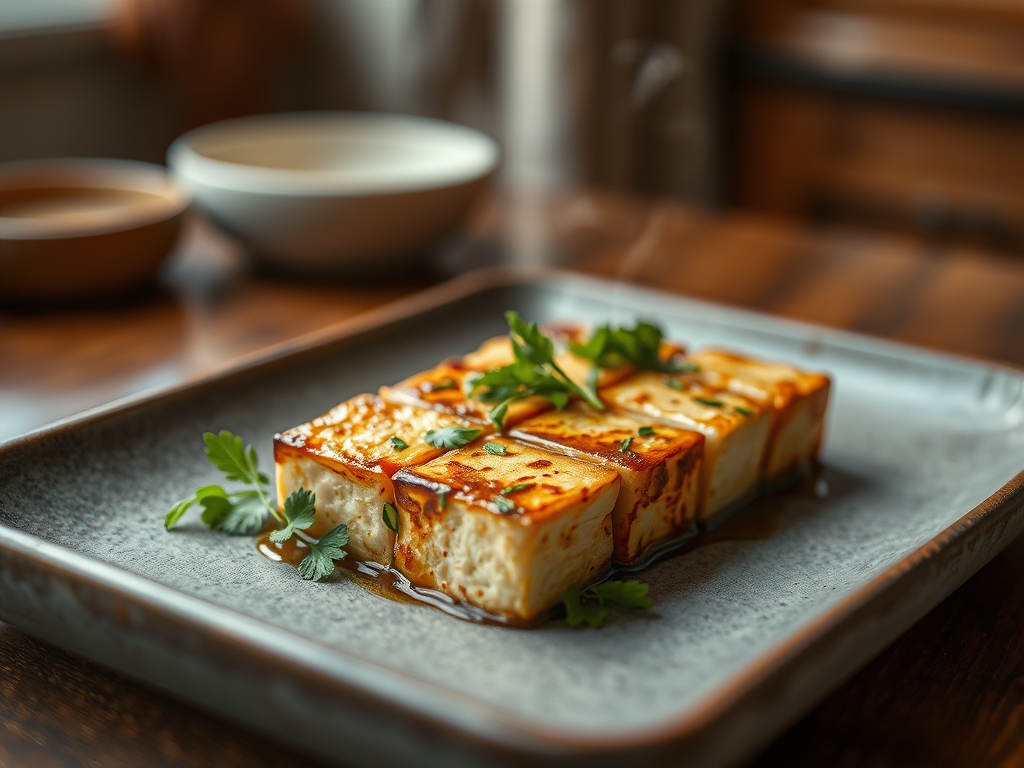
Referencing the Masterclass photo, your Sheet Pan Tofu should exhibit a distinct "Gilded Edge." This is the dark, crispy perimeter where the starch has caramelized. If your tofu looks pale or "blond," your oven calibration is likely low; increase the heat by 10 degrees. If the edges are black but the centers are soft, you have likely used too much sugar in your marinade or placed the rack too close to the upper heating element. The ideal visual cue is a matte, rugged texture that looks like toasted breadcrumbs. If the surface looks "wet" or shiny, you have over-applied oil, which is preventing the moisture from escaping the protein matrix.
THE DEEP DIVE
Macro Nutrition Profile:
A standard serving of this Sheet Pan Tofu provides approximately 18g of plant-based protein, 12g of healthy fats, and 6g of complex carbohydrates. It is a nutrient-dense powerhouse with a high satiety index, making it an ideal anchor for various meal structures.
Dietary Swaps:
- Vegan: Naturally compliant. Ensure your sugar (if used in seasonings) is vegan-certified.
- Keto: Swap the cornstarch for almond flour or crushed pork rinds (if not vegan) to reduce the net carb count while maintaining the crunch.
- Gluten-Free: Ensure you are using Tamari or Coconut Aminos instead of traditional soy sauce to avoid wheat-based stabilizers.
Meal Prep & Reheating Science:
To maintain the molecular structure during reheating, avoid the microwave. Microwaves vibrate water molecules, which will turn your crispy exterior into a soggy mess. Instead, use an air fryer or a dry skillet for 3 minutes. This re-activates the fats and re-crisps the starch barrier without overcooking the interior custard.
THE KITCHEN TABLE
Why is my tofu sticking to the pan?
This usually occurs when the pan wasn't hot enough or you used a low-quality non-stick surface. To fix this, deglaze the pan with a splash of water or rice vinegar immediately after removing it from the oven to release the cubes.
Can I use a silken tofu for this?
Absolutely not. Silken tofu has a high water content and lacks the cross-linked protein structure required to hold a shape under high heat. It will collapse into a puddle. Stick to Extra-Firm or Super-Firm varieties for roasting.
How do I get a more piquant flavor profile?
Whisk together a glaze of sriracha, lime juice, and honey. Toss the tofu in this mixture during the last two minutes of roasting. This allows the sugars to tack up without burning, creating a sticky, spicy finish.
Does the size of the cube really matter?
Yes. Smaller cubes increase the surface-area-to-volume ratio, leading to a crispier result. Larger cubes will remain softer in the middle. Consistency in size ensures that no piece is burnt while others remain under-developed.
Should I use parchment paper?
Parchment paper is excellent for easy cleanup, but for the absolute best sear, cook directly on a well-oiled metal pan. The direct metal-to-tofu contact facilitates a more aggressive heat transfer, resulting in a superior crust.