Listen to the sound of a kitchen operating at peak efficiency. It is not the sound of guessing. It is the rhythmic thrum of a convection fan and the precise click of a magnetic sensor. When you commit to the pursuit of the perfect roast, you are not just cooking; you are managing a thermal event. The difference between a dry, fibrous disaster and a succulent, edge to edge medium rare masterpiece is exactly three degrees of internal temperature. This is where the Probe Thermometer Meat protocol becomes your most vital asset. We are moving beyond the era of "poking the steak with a finger" or relying on "vibes" to determine doneness. We are auditing the very molecular structure of protein. Imagine a ribeye where the intramuscular fat has reached its exact rendering point of 130 degrees Fahrenheit, creating a viscous, buttery mouthfeel that coats the palate. This is the infrastructure of flavor. It requires precision, data, and the refusal to accept anything less than mathematical perfection in every sear.
THE DATA MATRIX
| Metric | Specification |
|---|---|
| Prep Time | 20 Minutes |
| Execution Time | 90 Minutes |
| Yield | 4 Servings |
| Complexity (1-10) | 4 |
| Estimated Cost per Serving | $18.50 |
THE GATHERS
Ingredient Protocol:
- 1.4 kg / 3 lbs Center-cut Beef Tenderloin (Prime Grade)
- 30 ml / 2 tbsp High-smoke point Avocado Oil
- 60 g / 4 tbsp Unsalted European Butter
- 4 Large Garlic Cloves (Smashed)
- 15 g / 3 sprigs Fresh Rosemary
- 20 g / 1.5 tbsp Coarse Kosher Salt
- 10 g / 2 tsp Cracked Tellicherry Black Peppercorns
Section A: Ingredient Quality Audit:
If your beef arrives with excessive surface moisture, the Maillard reaction will fail. Use a lint free paper towel to desiccate the exterior for at least two hours in the refrigerator. If the fat cap is waxy or brittle, it indicates poor aging; you must infuse the pan with higher quality fats like tallow to compensate. Sub-par herbs that lack aromatics should be bloomed in the butter early to extract what little volatile oils remain. Always ensure your salt is coarse; fine table salt will dissolve too quickly and fail to create the necessary osmotic pressure to draw moisture back into the fibers during the resting phase.
THE MASTERCLASS
1. The Surface Preparation
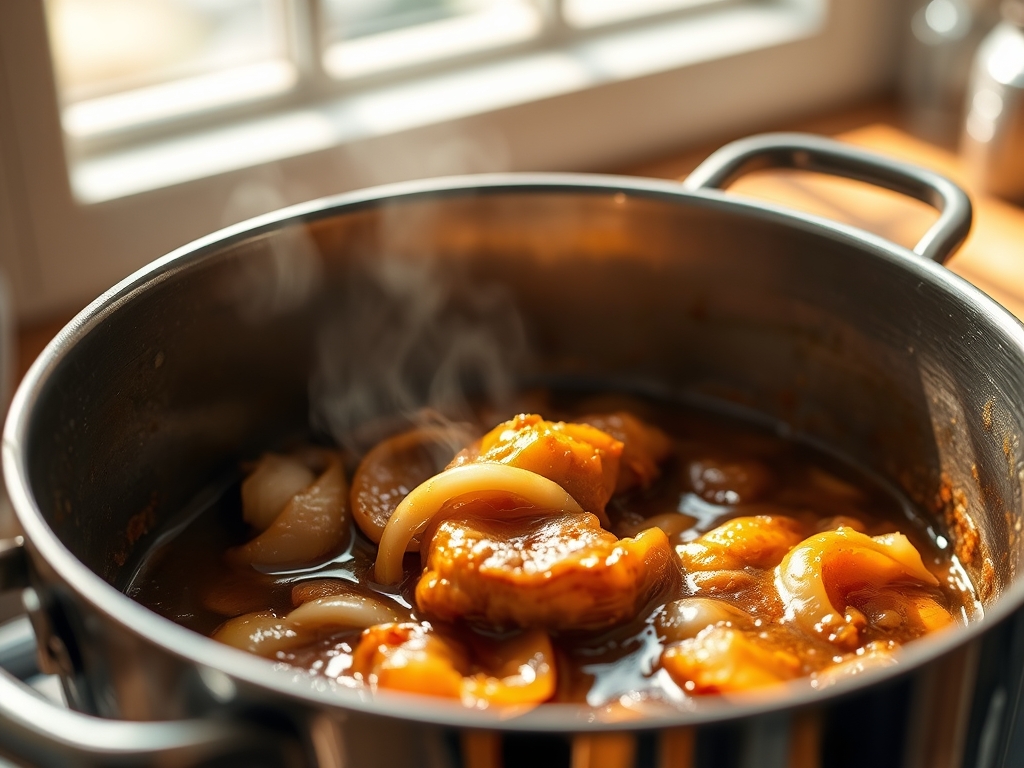
Apply a generous coating of salt and pepper to the protein. Ensure the coverage is uniform across all planes of the meat. Use a digital scale to measure your seasoning if you want absolute consistency across multiple batches. This creates the foundation for a crust that will eventually deglaze into a piquant pan sauce.
Pro Tip: Salt acts as a denaturant. By seasoning forty minutes before heat application, you allow the salt to penetrate the muscle fibers, breaking down proteins and increasing moisture retention during the high heat phase.
2. The Initial Thermal Shock
Heat a heavy bottomed stainless steel pan or cast iron skillet until it reaches 425 degrees Fahrenheit. Add the avocado oil. Sear the beef on all sides until a deep, mahogany crust forms. This is the Maillard reaction in its purest form. Use a bench scraper to clear any burnt bits from the board during the process to keep your workspace sterile.
Pro Tip: High heat creates a pressure gradient. By searing the exterior quickly, you create a thermal "crust" that helps regulate the heat transfer toward the center of the roast as it moves to the oven.
3. Probe Integration and Roasting
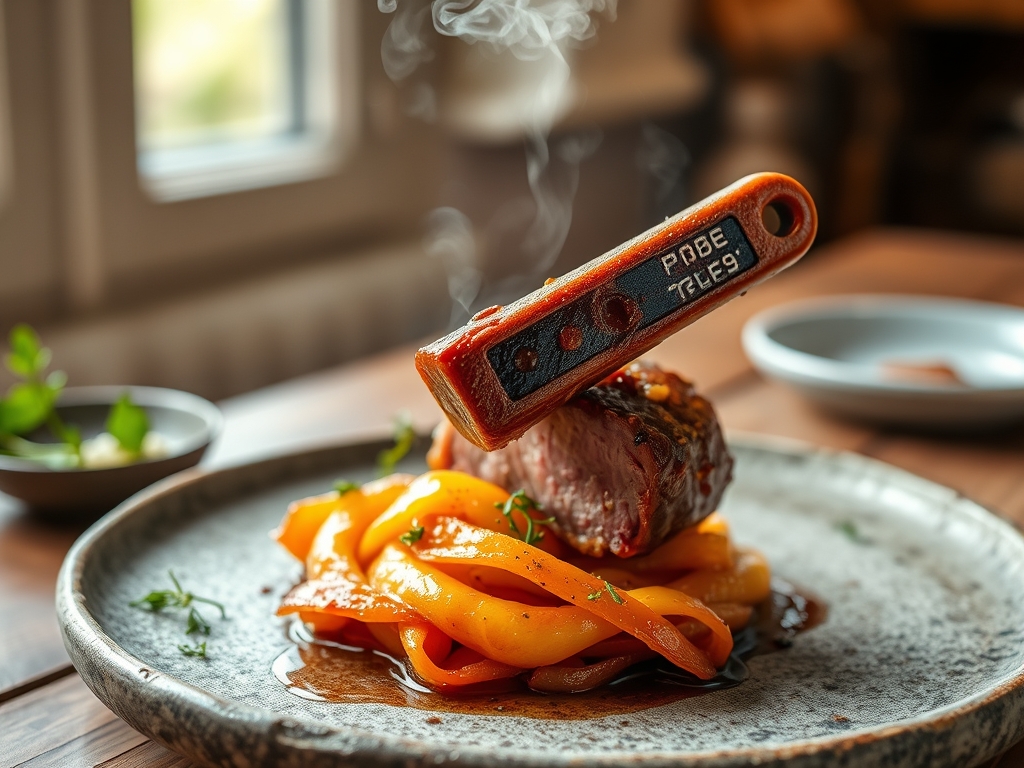
Insert your Probe Thermometer Meat sensor into the thickest part of the muscle, ensuring the tip does not touch bone or fat pockets, which conduct heat differently than lean tissue. Set your alert for 125 degrees Fahrenheit for a perfect medium rare finish. Place the meat in a low oven at 250 degrees Fahrenheit.
Pro Tip: Low and slow roasting minimizes the "gray band" of overcooked meat near the surface. Using a professional probe allows you to monitor the internal temperature in real time without opening the oven door and losing ambient heat.
4. The Butter Baste and Infusion
When the internal temperature hits 115 degrees Fahrenheit, remove the pan. Add the butter, rosemary, and garlic. Tilt the pan and use a large spoon to aerate and splash the foaming butter over the meat. This adds a final layer of nutty, complex flavor.
Pro Tip: This technique, known as arrosé, uses the butter as a heat transfer medium to finish the cooking process gently while the aromatics infuse the surface fat.
5. The Molecular Rest
Transfer the beef to a wire rack. Do not tent with foil, as this traps steam and softens the crust. Allow the meat to rest until the carryover cooking brings the final internal temperature to 132 degrees Fahrenheit.
Pro Tip: Resting allows the internal pressure to equalize. As the temperature drops slightly, the muscle fibers relax and reabsorb the viscous juices that were pushed toward the center during cooking.
Section B: Prep & Timing Fault-Lines:
The most common failure is the "thermal spike." If you pull the meat at your target temperature, carryover cooking will push it into the next doneness zone, ruining the texture. Always pull the meat 5 to 7 degrees early. Another fault line is the "cold core" error; if the meat is taken directly from the fridge to the pan, the exterior will burn before the interior reaches safety. Always temper your protein at room temperature for at least sixty minutes.
THE VISUAL SPECTRUM
Section C: Thermal & Visual Troubleshooting:
Look at the Masterclass photo. Notice the uniform, dark brown exterior and the absence of a thick gray ring inside. If your meat looks "gray" or "steamed" on the outside, your pan was not hot enough or you overcrowded the surface. If the center is purple and cold despite a dark exterior, you used too much heat too fast. The visual cue for a perfect rest is a surface that looks "matte" rather than "shiny" with leaking red fluid. If you see a puddle of red on the board, you sliced too early; the molecular structure had not yet stabilized.
THE DEEP DIVE
- Macro Nutrition Profile: High density protein (approx 25g per 100g). Rich in heme iron, B12, and zinc. Fat content varies by cut, but prime tenderloin averages 15g of fat per serving.
- Dietary Swaps: For a Keto profile, increase the butter baste. For a Paleo approach, swap butter for clarified ghee. For a Vegan alternative, apply these thermal principles to a thick-cut cauliflower steak or a seitan loaf, though internal temperature targets will shift to 165 degrees Fahrenheit for texture.
- Meal Prep & Reheating Science: To maintain the molecular structure when reheating, avoid the microwave. Use a sous-vide bag at 120 degrees Fahrenheit or a low oven with a splash of beef stock to prevent the fibers from tightening and becoming "rubbery."
THE KITCHEN TABLE
Why is my meat always tough?
You are likely skipping the rest phase or cutting with the grain. Always slice against the muscle fibers to shorten them, making the bite feel more tender. Also, verify your internal temperature with a calibrated probe.
Can I use a cheap thermometer?
Inaccuracy is the enemy of excellence. Cheap analog dials are notoriously off by up to ten degrees. Invest in a high speed digital probe to ensure your data is reliable and your results are repeatable.
What if I overcook it?
If you pass the 145 degree mark, the proteins have tightened significantly. Your best recovery is to slice the meat very thin and serve it with a viscous sauce or au jus to provide artificial lubrication to the palate.
Does the type of salt matter?
Yes. Kosher salt has a larger crystal size which allows for better control. Table salt is too dense and can easily lead to over-salting, which draws out too much moisture and ruins the sear.