The kitchen is no longer a sanctuary; it is a high-velocity testing ground for structural engineering and thermal dynamics. When you drop a high-quality link into the basket, you are not just making breakfast. You are managing the delicate transition of a protein-packed cylinder from a raw, flaccid state to a taut, snap-worthy masterpiece. The Air Fryer Sausage is the ultimate test of casing integrity. We are looking for that specific, audible crackle when the incisors breach the collagen barrier, followed immediately by an explosion of rendered lipids and seasoned meat. In the convective chaos of an air fryer, the goal is total Maillard saturation without the catastrophic failure of a burst seam. We want the exterior to bronze into a deep, mahogany lacquer while the interior remains a succulent, emulsified matrix. If your links come out looking like shriveled, gray fingers of disappointment, your protocol is flawed. It is time to audit your workflow, recalibrate your thermal settings, and treat your morning protein with the technical respect it demands.
THE DATA MATRIX
| Metric | Specification |
|---|---|
| Prep Time | 2 Minutes |
| Execution Time | 12 to 15 Minutes |
| Yield | 4 to 6 Links |
| Complexity (1-10) | 2 (Low Entry, High Precision) |
| Estimated Cost per Serving | $1.50 – $2.75 |
THE GATHERS
Ingredient Protocol:
- 500g / 1.1 lbs High-Quality Pork or Beef Sausages (Natural Casing Preferred)
- 15ml / 1 tbsp Neutral High-Smoke Point Oil (Avocado or Grapeseed)
- 5g / 1 tsp Smoked Paprika (Optional for aesthetic enhancement)
- 2g / 0.5 tsp Coarse Sea Salt (For surface friction)
Section A: Ingredient Quality Audit:
The primary failure point in any Air Fryer Sausage operation is the quality of the casing. Synthetic cellulose casings often lack the elasticity required for rapid thermal expansion; they tend to peel or become unpleasantly "plastic" under high-velocity air. Technical Fix: Source links with natural hog or sheep casings. If you are stuck with sub-par, supermarket-grade links that appear pale and "sweaty" out of the package, pat them dry with a lint-free lint cloth and allow them to air-dry in the refrigerator for 20 minutes. This creates a "pellicle," a dry surface that encourages the Maillard reaction and prevents the meat from steaming inside the skin.
THE MASTERCLASS
1. Thermal Calibration and Preheating
Set your air fryer to 200C / 400F. Many amateur cooks skip the preheat phase, but this is a critical error in structural management. A cold start leads to uneven rendering, where the fat melts before the casing can set its shape.
Pro Tip: Use a digital infrared thermometer to verify the basket surface temperature. A hot start ensures the casing immediately begins to render and contract, locking in the internal juices before they can leak out.
2. Surface Preparation and Friction
Lightly coat the links in your neutral oil. While sausages have internal fat, an external lipid layer acts as a heat conductor, ensuring the convective air transfers energy evenly across the curved surface.
Pro Tip: Weigh your oil on a digital scale to ensure you aren't over-saturating. Too much oil will smoke and create a bitter soot on the skin; you only need a microscopic film to infuse the surface with heat.
3. Spatial Configuration
Arrange the sausages in a single layer with at least 2cm of clearance between each link. Overcrowding inhibits the "cyclone effect" of the air fryer, leading to pale "dead zones" where the sausages touch.
Pro Tip: Use a bench scraper to move the links from the prep station to the basket to avoid piercing the delicate skins with sharp tongs before the cooking process begins.
4. The Mid-Cycle Rotation
At the 7-minute mark, open the drawer and agitate the basket or use silicone-tipped tongs to rotate each link 180 degrees. This ensures the contact points with the basket grate do not become over-charred.
Pro Tip: This is the moment to check for "ballooning." If a casing looks ready to burst, a single, microscopic prick with a sterile needle can release excess steam pressure without compromising the viscous interior.
5. Final Internal Audit
Continue cooking for another 5 to 8 minutes depending on the thickness of the link. The goal is an internal temperature of 71C / 160F for pork or 74C / 165F for poultry.
Pro Tip: Use a fast-response thermocouple probe to check the temperature. Inserting the probe through the end of the sausage rather than the side minimizes juice loss and maintains the structural integrity of the main body.
Section B: Prep & Timing Fault-Lines:
Timing is the variable that most often collapses under pressure. If you pull the sausages too early, the fat has not fully rendered, leaving a grainy, unpleasant texture. If you go too long, the internal moisture evaporates, leaving a hollow, woody core. Technical Fix: Always account for "carry-over cooking." Remove the sausages 2 degrees below your target temperature. Place them on a warm saucier lid or a heated plate to rest for 3 minutes. This allows the internal pressure to stabilize, ensuring the juices stay within the matrix when you finally take that first bite.
THE VISUAL SPECTRUM
Section C: Thermal & Visual Troubleshooting:
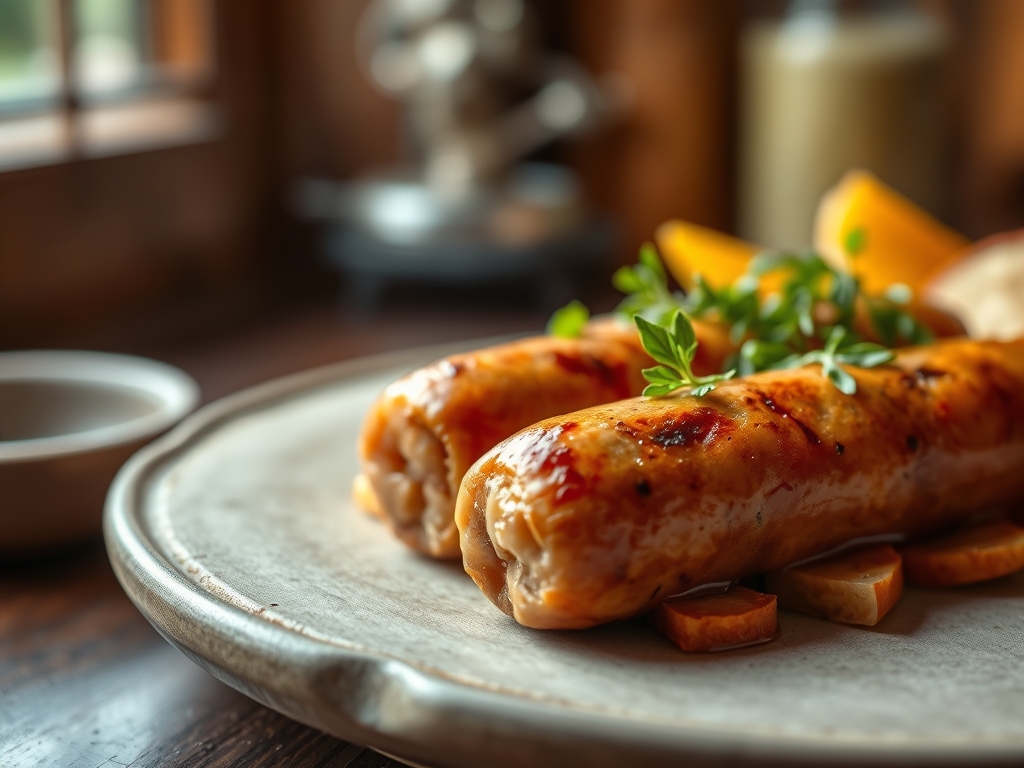
Referencing the Masterclass photo above, observe the deep, variegated bronzing. If your sausages look "blotchy," it indicates uneven oil distribution or a failure to rotate. If the skins are shriveled like a raisin, you have exceeded the thermal limit and dehydrated the protein. Technical Fix: For a more piquant and visually striking finish, lightly dust the links with smoked paprika halfway through. This provides a "micro-texture" that catches the light and enhances the perceived "snap." If the links look dull, a quick brush with a deglaze of apple cider vinegar and honey in the final 60 seconds will provide a high-gloss, professional sheen.
THE DEEP DIVE
Macro Nutrition Profile:
A standard pork link (approx. 75g) delivers 18g of Fat, 12g of Protein, and less than 1g of Carbohydrates. The air fryer method is superior for macro-management as it allows excess surface fat to drain away into the reservoir rather than pooling around the meat as it would in a traditional skillet.
Dietary Swaps:
- Vegan: Use plant-based links but reduce the temperature to 180C / 350F. Synthetic plant casings have a lower melting point and will scorch if treated with high-intensity heat.
- Keto/GF: Most high-end sausages are naturally Keto, but always audit the label for "fillers" like rusk or breadcrumbs which act as unnecessary carb-loading agents.
Meal Prep & Reheating Science:
To maintain the molecular structure during reheating, avoid the microwave at all costs. The microwave agitates water molecules, turning the internal moisture into steam that softens the casing. Instead, return the links to the air fryer at 190C / 375F for 3 minutes. This will aerate the exterior and restore the original snap without overcooking the center.
THE KITCHEN TABLE
Why did my sausage casing split open?
This is usually caused by a "thermal shock" from a cold start or trapped steam. Ensure you preheat the fryer and, if using extra-thick links, use a needle to create one tiny vent to manage internal pressure.
Can I cook frozen sausages in the air fryer?
Yes, but you must lower the temperature to 170C / 340F and extend the time by 5 to 8 minutes. This allows the core to defrost before the exterior over-caramelizes, maintaining a consistent thermal gradient.
How do I get that "snap" without deep frying?
The "snap" is a result of the casing dehydrating slightly while the fat underneath renders. High-velocity air is perfect for this. Ensure the surface is dry before adding a very thin layer of oil to conduct heat.
Is it necessary to prick the sausages?
For high-quality, natural casings, it is generally unnecessary and can lead to a dry interior. Only prick if you notice significant "ballooning" during the cook or if you are using sausages with a very high water-to-fat ratio.