Imagine the sensory overload of a kitchen under pressure. The air vibrates with the rhythmic hiss of a steam valve while the scent of deeply browned bovine fat and aromatic mirepoix saturates the atmosphere. This is the high stakes world of the Instant Pot Pot Roast. We are not merely cooking; we are performing a high speed structural audit of connective tissue. In the traditional world, breaking down the stubborn collagen of a chuck roast requires a four hour investment of thermal energy. Here, we utilize atmospheric pressure to force moisture into the protein fibers, collapsing the triple helix structure of collagen into silky, gelatinous bliss in a fraction of the time. The result is a fork tender masterpiece that defies the laws of conventional slow cooking. This is where culinary intuition meets mechanical efficiency. We are hunting for that perfect Maillard reaction on the exterior and a succulent, juicy interior that shatters at the mere suggestion of a utensil. Strap in, because we are about to overhaul your Sunday dinner infrastructure.
THE DATA MATRIX
| Metric | Specification |
|---|---|
| Prep Time | 20 Minutes |
| Execution Time | 60 Minutes (High Pressure) |
| Yield | 6 to 8 Servings |
| Complexity (1-10) | 4 |
| Estimated Cost per Serving | $4.50 – $6.00 |
THE GATHERS
Ingredient Protocol:
- 1.4 kg / 3 lbs Beef Chuck Roast (well-marbled)
- 30 ml / 2 tbsp High-smoke point oil (Grapeseed or Avocado)
- 15 g / 1 tbsp Kosher salt
- 5 g / 1 tsp Freshly cracked black pepper
- 500 ml / 2 cups Beef bone broth (high gelatin content)
- 250 ml / 1 cup Dry red wine (Cabernet or Merlot)
- 45 ml / 3 tbsp Worcestershire sauce
- 45 g / 3 tbsp Tomato paste
- 680 g / 1.5 lbs Yukon Gold potatoes (halved)
- 450 g / 1 lb Large carrots (cut into 2-inch chunks)
- 2 medium Yellow onions (quartered)
- 5 cloves Garlic (smashed)
- 3 sprigs Fresh thyme
- 2 sprigs Fresh rosemary
- 30 g / 2 tbsp Cornstarch (mixed with 30 ml cold water for slurry)
Section A: Ingredient Quality Audit:
The primary failure point in most roasts is the selection of the protein. If your chuck roast lacks significant intramuscular marbling, the final product will be "stringy" rather than "succulent." To fix a lean cut, you must infuse additional fats during the searing phase. If your vegetables turn to mush, it is likely because they were cut too small. Aim for large, structural pieces that can withstand the high-pressure environment. If your broth tastes thin or metallic, it lacks the necessary viscous quality provided by gelatin. You can remediate this by whisking in a teaspoon of unflavored gelatin powder or using a high-quality bone broth reduced by half.
THE MASTERCLASS
Step-by-Step Execution:
1. The Thermal Foundation
Pat the beef dry with paper towels to ensure maximum surface contact. Season aggressively with salt and pepper using a digital scale to ensure a 1.5 percent salt-to-weight ratio. Set the pressure cooker to "Sauté" on high. Once the display reads "Hot," add the oil and sear the beef for 5 to 7 minutes per side until a deep, mahogany crust forms.
Pro Tip: This is the Maillard reaction in action. Do not crowd the pot. If the meat is too large, sear it in batches to avoid steaming the protein, which prevents the development of complex flavor compounds.
2. Deglaze and Extract
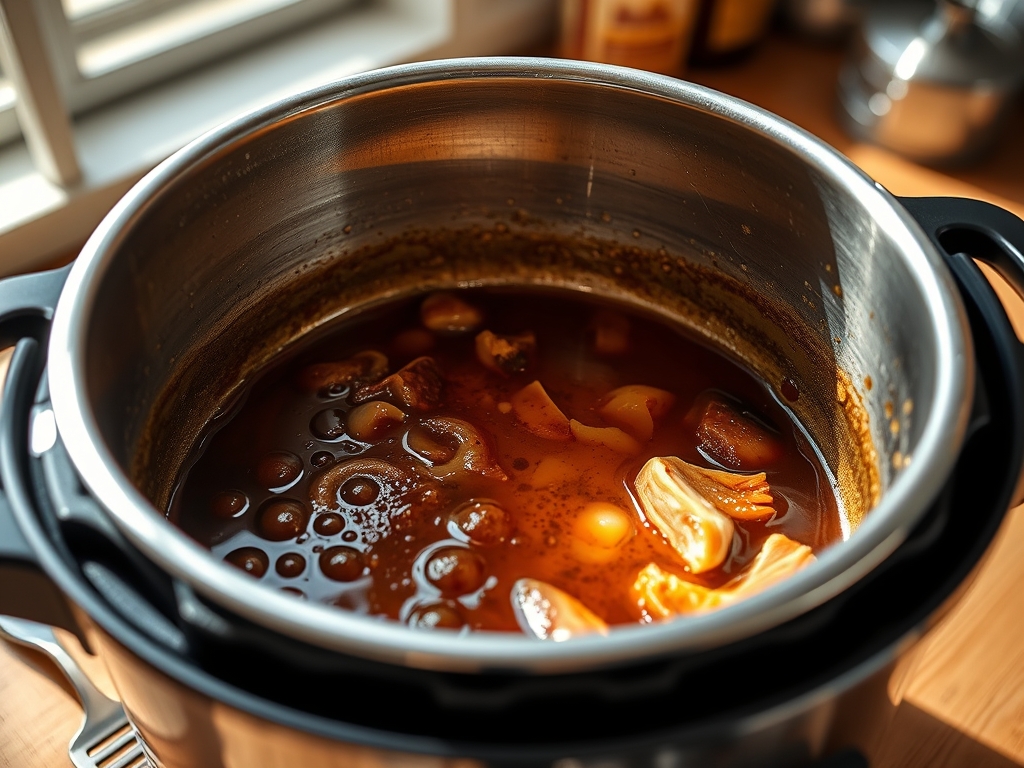
Remove the meat and set it aside on a bench scraper cleaned work surface. Add the onions and garlic to the pot, stirring for 2 minutes. Pour in the red wine to deglaze the inner liner, using a wooden spoon to scrape up every bit of the "fond" (the browned bits) stuck to the bottom.
Pro Tip: If you skip the scraping, you risk a "Burn" notice from the sensors. Those browned bits are concentrated umami; incorporating them into the liquid creates a piquant and complex sauce base.
3. The Liquid Matrix
Whisk the tomato paste, Worcestershire sauce, and beef broth into the pot. Return the beef to the vessel and nestle the thyme and rosemary around it. Secure the lid and set the manual pressure to "High" for 60 minutes.
Pro Tip: Always use a saucier or a separate bowl to mix your liquids before adding them to the pot. This ensures the tomato paste is fully emulsified and won't clump or scorch at the bottom of the pressure chamber.
4. The Vegetable Integration
Once the timer expires, perform a "Natural Pressure Release" for 15 minutes before venting the remaining steam. Open the lid, add the potatoes and carrots on top of the meat, and seal again. Cook on "High Pressure" for an additional 5 minutes, followed by a "Quick Release."
Pro Tip: Cooking vegetables separately or at the end prevents the "thermal overshoot" that turns carrots into baby food. The 5 minute window is the "Goldilocks" zone for root vegetable structural integrity.
5. The Sauce Refinement
Remove the meat and vegetables to a warm platter. Switch the unit back to "Sauté." Whisk in the cornstarch slurry and simmer for 3 to 5 minutes until the liquid becomes a thick, glossy gravy.
Pro Tip: Use a whisk to aerate the sauce as it thickens. This incorporates a small amount of air, making the gravy feel lighter on the palate while maintaining its rich, coating properties.
Section B: Prep & Timing Fault-Lines:
The most common human error is the "Quick Release" trap. If you release the pressure immediately after the 60 minute cycle, the sudden drop in pressure causes the moisture inside the meat to boil violently and escape, leaving you with dry beef. The 15 minute natural release is a mandatory resting period that allows the muscle fibers to relax and reabsorb the cooking juices. Another fault-line is temperature control of the liquid. Adding ice-cold broth to a hot pot can warp the liner or cause the searing process to stall. Always use room temperature or warm liquids to maintain thermal momentum.
THE VISUAL SPECTRUM
Section C: Thermal & Visual Troubleshooting:
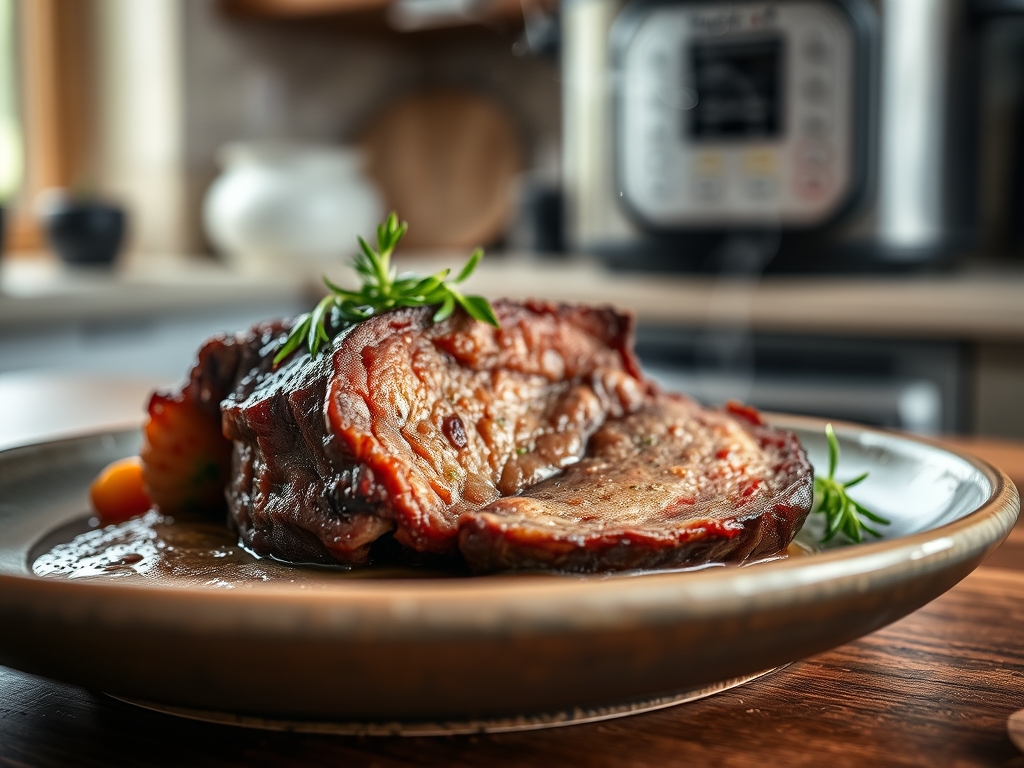
Referencing the Masterclass photo above, observe the deep saturation of the carrots and the glistening sheen on the beef. If your roast looks gray or "boiled," your initial sear was insufficient. You cannot fix a poor sear after the pressure cycle begins. If the gravy looks dull or matte, it lacks enough fat or emulsification. Whisking in a cold knob of butter at the very end (the "monter au beurre" technique) will provide that professional, mirror-like finish seen in the image. If the potatoes are falling apart, check your "Quick Release" timing; any delay in venting after the 5 minute vegetable cycle will result in over-extraction of starches.
THE DEEP DIVE
Macro Nutrition Profile:
A standard serving (approx. 250g) contains roughly 450 calories, 35g of protein, 22g of fat, and 28g of carbohydrates. The high collagen content provides a significant boost of glycine and proline, essential amino acids for joint and skin health.
Dietary Swaps:
- Vegan: Replace beef with large chunks of "Lion's Mane" mushrooms or seitan logs. Use vegetable bouillon and a splash of soy sauce for umami.
- Keto: Omit the potatoes and carrots; replace with cauliflower florets (added at the very end) and use xanthan gum instead of cornstarch.
- GF: Ensure your Worcestershire sauce is certified gluten-free and use arrowroot powder or cornstarch as the thickener.
Meal Prep & Reheating Science:
Pot roast is a molecular marvel that often tastes better the next day. As the dish cools, the gelatin sets into a semi-solid matrix, further infusing the meat with flavor. When reheating, avoid the microwave, which can toughen the proteins. Instead, reheat gently in a covered pan over low heat to allow the gelatin to liquefy without overcooking the meat fibers.
THE KITCHEN TABLE
Why is my beef still tough after 60 minutes?
It likely needed more time or a natural release. Large or exceptionally tough cuts may require 75 to 80 minutes. Ensure you didn't skip the 15 minute resting period, as this is crucial for fiber relaxation.
Can I use frozen beef?
Yes, but increase the pressure time by 50 percent. Note that you will lose the ability to sear the meat effectively, which significantly impacts the depth of flavor in the final gravy.
Is the red wine mandatory?
While not mandatory, the acidity in the wine helps break down the connective tissue and balances the richness of the beef fat. You can substitute with extra broth and a tablespoon of balsamic vinegar.
My gravy is too salty! How do I fix it?
Add a splash of water or unsalted broth to dilute. Alternatively, add a pinch of sugar or a squeeze of lemon juice. The acid or sweetness will distract the palate from the over-salinity.
What is the best potato for this?
Yukon Golds are the gold standard. They possess a creamy texture and a thin skin that doesn't require peeling, and they hold their shape much better than starchy Russet potatoes under high pressure.