Listen up, culinary architects. We are not just boiling noodles; we are conducting a high-stakes engineering project involving lipid suspension and starch gelatinization. The One Pot Sausage Pasta is the ultimate test of your ability to manage a closed-system thermal environment. Imagine the scene: the piquant aroma of fennel seeds hitting hot steel, the aggressive sizzle as pork fat begins to render, and the precise moment when the pasta water transforms from a thin liquid into a viscous, gold-flecked nectar. This is the intersection of efficiency and luxury. We are bypassing the traditional two-pot method to harness every milligram of released starch, using it as a molecular glue to bind the sauce directly to the grain of the noodle. If you execute this correctly, the result is a unified masterpiece of texture. If you fail, you are left with a gummy, over-saturated mess. We do not accept failure in this kitchen. Prepare your stations for a deep-tissue audit of the most efficient comfort food in your repertoire.
THE DATA MATRIX
| Metric | Specification |
|---|---|
| Prep Time | 12 Minutes |
| Execution Time | 18 Minutes |
| Yield | 4 Servings |
| Complexity (1-10) | 3 |
| Estimated Cost per Serving | $2.45 |
THE GATHERS
Ingredient Protocol:
- Italian Sausage (Bulk or Casings Removed): 450g / 1 lb
- Dry Penne or Rigatoni: 450g / 1 lb
- Yellow Onion (Finely Diced): 150g / 1 medium
- Garlic (Microplaned): 15g / 4 cloves
- Chicken Stock (Low Sodium): 950ml / 4 cups
- Heavy Cream (36% Fat): 120ml / 0.5 cup
- Parmesan Cheese (Freshly Grated): 60g / 0.5 cup
- Baby Spinach: 60g / 2 cups
- Smoked Paprika: 5g / 1 tsp
- Red Pepper Flakes: 2g / 0.5 tsp
- Kosher Salt and Black Pepper: To taste
Section A: Ingredient Quality Audit:
The Problem: Sausage that "clumps" into rubbery nodules rather than fine crumbles.
The Fix: Your sausage has too much binder or was worked while warm. Ensure the meat is refrigerator-cold before hitting the pan. Use a stiff metal spatula to aggressively break the protein bonds during the initial sear.
The Problem: The sauce feels thin and watery despite following measurements.
The Fix: This indicates a lack of surface starch on your pasta. Avoid "enriched" pastas that have been coated in oil or additives. Use a bronze-cut noodle; the rough surface area increases starch release, which is vital for a stable emulsion.
The Problem: Garlic that tastes bitter or "burnt-metallic."
The Fix: You likely added the garlic too early. Garlic contains volatile oils that scorch at low temperatures. Add it only after the onions have reached a translucent state to provide a moisture buffer.
THE MASTERCLASS
1. The Maillard Initiation
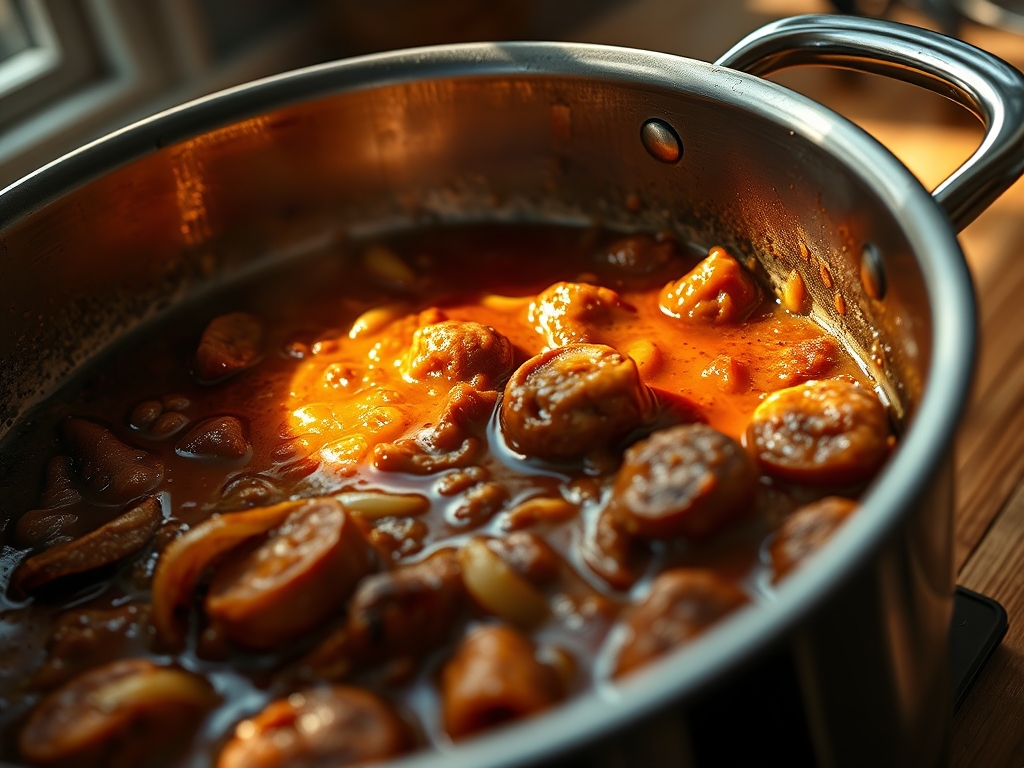
Set your saucier or deep skillet over medium-high heat. Add a teaspoon of neutral oil and the sausage. Use a bench scraper or wooden spoon to pulverize the meat into small, uniform pieces. Cook until deep brown.
Pro Tip: This browning is the Maillard reaction. By allowing the meat to develop a dark crust, you are creating complex flavor compounds that cannot be replicated by seasoning alone. Do not crowd the pan; moisture must evaporate instantly to prevent steaming.
2. Aromatic Integration
Add the diced onions to the rendered sausage fat. Sauté for 4 minutes until the onions soften and begin to deglaze the bottom of the pan. Add the garlic, smoked paprika, and red pepper flakes in the final 60 seconds of this phase.
Pro Tip: Fat is a flavor carrier. By toasting your spices in the rendered lard before adding liquids, you infuse the fat with fat-soluble aromatics, ensuring the flavor is distributed evenly throughout the entire dish.
3. The Liquid Load and Starch Release
Pour in the chicken stock and the dry pasta. Use your digital scale to ensure the pasta-to-liquid ratio is exact. Bring the mixture to a rolling boil, then reduce to a simmer. Cover the pan partially.
Pro Tip: In a one-pot system, the pasta water never leaves the pan. This means the starch that usually goes down the drain stays in the pot, creating a naturally viscous base that will eventually emulsify with your fats.
4. The Emulsion Phase
Once the pasta is al dente and the liquid has reduced by 75%, stir in the heavy cream and spinach. Toss vigorously. The mechanical action of stirring helps aerate the sauce and encourages the fats to bond with the starchy liquid.
Pro Tip: Use a high-quality silicone spatula to scrape the sides of the pan. This ensures every drop of concentrated starch is incorporated into the final emulsion, preventing a broken or oily sauce.
5. The Final Consolidation
Remove from heat and fold in the Parmesan cheese. The residual heat will melt the cheese without breaking the proteins. Let the dish rest for 120 seconds before serving.
Pro Tip: Resting is crucial. As the temperature drops slightly, the sauce thickens and "sets" onto the noodles. This is when the One Pot Sausage Pasta achieves its final, unified structural integrity.
Section B: Prep & Timing Fault-Lines:
The Heat Spike: If your liquid boils off before the pasta is tender, your heat was too high or your lid was off. Add 50ml of boiling water (never cold) to compensate without shocking the starch.
The Texture Lag: Adding the spinach too early results in a gray, slimy mess. The spinach only needs 30 seconds of residual heat to wilt while maintaining its vibrant chlorophyll structure.
THE VISUAL SPECTRUM
Section C: Thermal & Visual Troubleshooting:
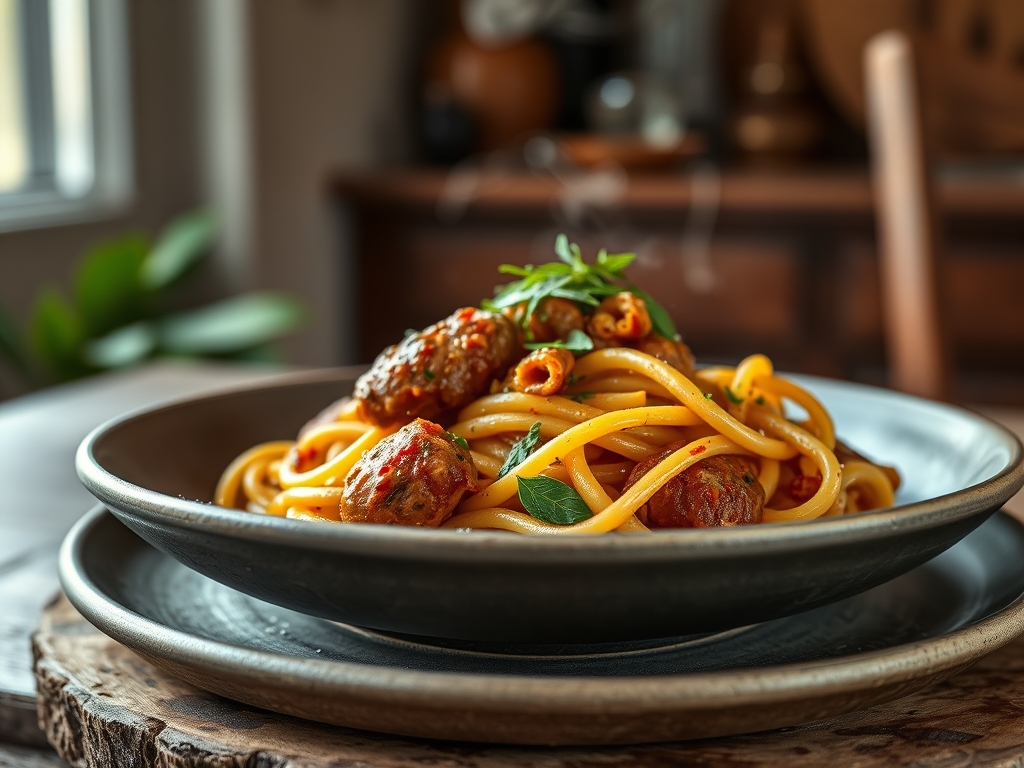
Look at the Masterclass photo. Notice the glossy sheen on the noodles; this indicates a successful emulsion. If your pasta looks matte or dry, the starch-to-fat ratio is off. Add a splash of cream and toss aggressively to restore the shine.
Observe the color contrast. The deep red-orange of the sauce comes from the smoked paprika reacting with the fats. If your sauce looks pale, you likely skimped on the browning phase or used under-pigmented spices. Finally, check the suspension. The sausage crumbles should be evenly distributed, not sunk to the bottom. If they are sinking, your sauce is too thin; reduce it further over medium heat for 60 seconds.
THE DEEP DIVE
Macro Nutrition Profile
Per serving, this dish provides approximately 650 calories, 32g of protein, 55g of carbohydrates, and 34g of fat. It is a calorie-dense fuel source designed for high-output individuals. The sodium content is significant due to the sausage and stock; use low-sodium variants to modulate this.
Dietary Swaps
- Vegan: Swap sausage for soy-based crumbles, use vegetable stock, and replace cream/cheese with cashew cream and nutritional yeast.
- Keto: Replace pasta with cauliflower florets or konjac noodles. Reduce stock by 50% as these do not absorb liquid like wheat.
- GF: Use high-quality brown rice pasta. Note that GF pasta releases less starch; you may need a cornstarch slurry to achieve the desired viscosity.
Meal Prep & Reheating Science
To maintain molecular structure during reheating, add a teaspoon of water before microwaving. This creates a localized steam environment that "unlocks" the congealed starches without making the noodles mushy. Avoid high-power settings; use 60% power to prevent the fats from separating and becoming oily.
THE KITCHEN TABLE
Why is my sauce oily?
The emulsion has broken. This usually happens if the heat is too high when adding cheese or cream. Remove from heat and add a teaspoon of hot water, then whisk vigorously to re-bind the fats and liquids.
Can I use different pasta shapes?
Yes, but surface area matters. Short, tubular shapes like penne or fusilli are superior for catching sausage crumbles. Long noodles like spaghetti often clump in a one-pot environment and are harder to manage.
Does the type of sausage matter?
Absolutely. High-fat content (around 20-30%) is necessary for flavor and sauce body. Lean sausages like chicken or turkey may require an additional tablespoon of olive oil to prevent the dish from tasting "flat."
Why is the pasta sticking to the bottom?
You aren't stirring enough during the first five minutes of the simmer. Starch is stickiest when it first begins to hydrate. Once the outer layer of the pasta is cooked, the sticking risk drops significantly.