Listen closely because your kitchen is currently a site of untapped kinetic potential. We are not just making a meal; we are re-engineering the structural integrity of day-old carbohydrates. The humble One Skillet Fried Rice is the ultimate test of your culinary infrastructure. It is a high-velocity operation where cold, desiccated grains meet the searing heat of a seasoned pan to create a symphony of Maillard reactions. If you have been settling for a soggy, monochromatic pile of mush, you are failing the audit. We are looking for individual grain definition; we want that piquant aroma of toasted sesame and the sharp bite of ginger. This is about thermal management and the aggressive application of heat to aerate the rice while it dances in a thin film of shimmering oil. Forget the takeout boxes and the limp vegetables. We are building a high-performance fuel source that utilizes the science of moisture evaporation and protein coagulation to deliver a dish that is as structurally sound as it is delicious. Prepare for impact.
THE DATA MATRIX
| Metric | Specification |
|---|---|
| Prep Time | 10 Minutes |
| Execution Time | 8 Minutes |
| Yield | 2 Standard Servings |
| Complexity (1-10) | 4 |
| Estimated Cost per Serving | $1.85 USD |
THE GATHERS
Ingredient Protocol:
- Cold Long-Grain Rice: 475ml / 2 cups (Must be 12 to 24 hours old).
- Large Eggs: 2 units (Room temperature for rapid coagulation).
- Neutral Oil: 30ml / 2 tbsp (Grapeseed or Avocado for high smoke points).
- Toasted Sesame Oil: 5ml / 1 tsp (For the final aromatic infusion).
- Soy Sauce: 22ml / 1.5 tbsp (The primary sodium and umami vector).
- Fresh Ginger: 15g / 1 tbsp (Microplaned for maximum surface area).
- Garlic Cloves: 3 units (Finely minced).
- Frozen Peas and Carrots: 120ml / 0.5 cup (Flash-thawed).
- Green Onions: 3 units (Bias-cut; whites and greens separated).
Section A: Ingredient Quality Audit:
The primary point of failure in One Skillet Fried Rice is moisture content. If your rice is fresh and steaming, it will turn into a gelatinous paste the moment it hits the pan. To fix this, spread fresh rice on a sheet tray and place it in front of a high-speed fan for 20 minutes to dehydrate the exterior starch. If your aromatics are dull, they have likely oxidized. Always grate your ginger and garlic immediately before the render phase to ensure the volatile oils are intact. If using frozen vegetables, ensure they are thoroughly patted dry; excess ice crystals will drop the pan temperature and kill your sear.
Step-by-Step Execution:
1. The Thermal Prime
Heat your heavy-bottomed skillet or wok over high heat until a drop of water flicked onto the surface evaporates instantly. Add the neutral oil and swirl to coat.
Pro Tip: Use an infrared thermometer to ensure the surface has reached at least 400 degrees Fahrenheit. This high temperature is required to trigger the Maillard reaction before the rice can absorb too much oil and become greasy.
2. The Protein Scramble
Pour the beaten eggs into the center of the pan. They should puff up and bubble immediately. Use a silicone spatula to quickly scramble them into small ribbons, then remove them from the pan while they are still slightly soft.
Pro Tip: Removing the eggs early prevents them from becoming rubbery during the final high-heat toss. A professional saucier knows that residual heat will finish the cooking process later.
3. The Aromatic Infusion
Add a small amount of additional oil if the pan looks dry. Toss in the white parts of the green onions, the minced garlic, and the grated ginger. Stir constantly for 30 seconds until the kitchen smells like a five-star bistro.
Pro Tip: Use a digital scale to measure your aromatics. Consistency is the hallmark of a professional kitchen; guessing leads to a dish that is either underpowered or unpleasantly pungent.
4. The Starch Searing
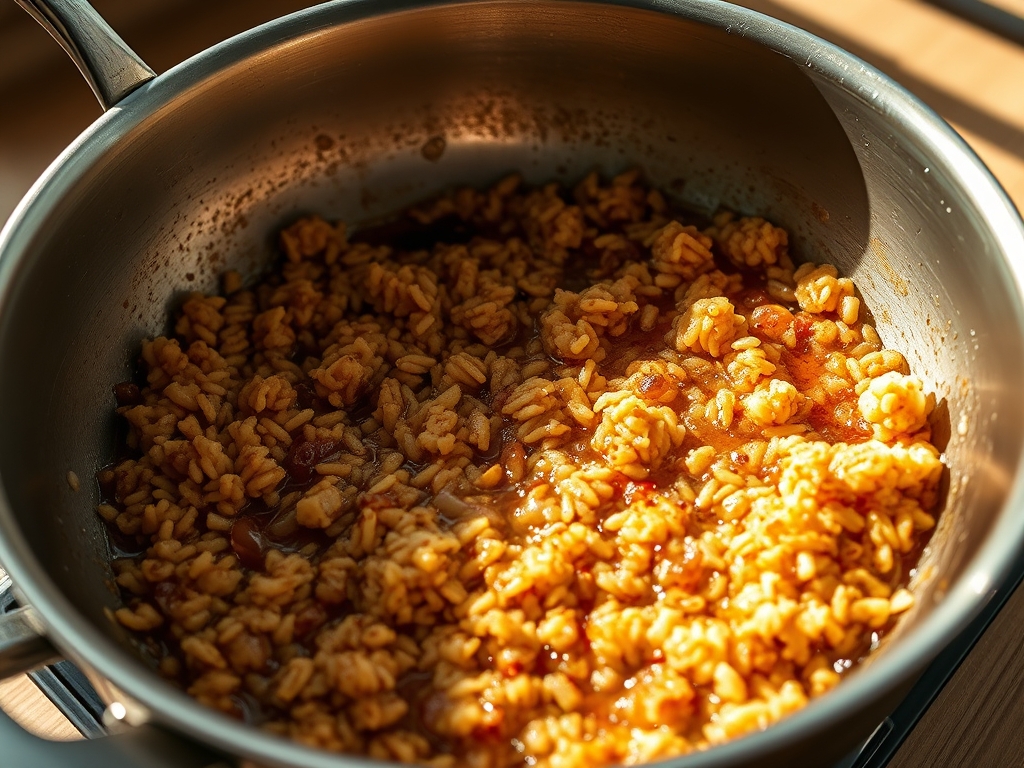
Add the cold rice to the pan. Use a bench scraper or a stiff spatula to break up any clumps. Press the rice against the hot surface of the skillet and let it sit undisturbed for 45 seconds to develop a golden crust.
Pro Tip: This is where you aerate the grains. By pressing and tossing, you ensure that every individual grain is coated in fat and exposed to the direct heat of the metal.
5. The Final Integration
Return the eggs to the pan along with the peas, carrots, and soy sauce. Toss vigorously for 2 minutes. Turn off the heat and drizzle with toasted sesame oil and the green parts of the onions.
Pro Tip: The sesame oil is a finishing oil. Its smoke point is too low for the searing phase, so adding it at the end preserves its delicate, nutty molecular structure.
Section B: Prep & Timing Fault-Lines:
The most common timing error is the "crowded pan" syndrome. If you attempt to cook four servings in a small skillet, the temperature will plummet and the rice will steam rather than fry. Work in batches if necessary. Another fault-line is the soy sauce application. Never pour it directly onto the rice; pour it around the edges of the pan so it hits the hot metal first. This causes the sauce to deglaze the pan and caramelize slightly before it coats the grains.
THE VISUAL SPECTRUM
Section C: Thermal & Visual Troubleshooting:
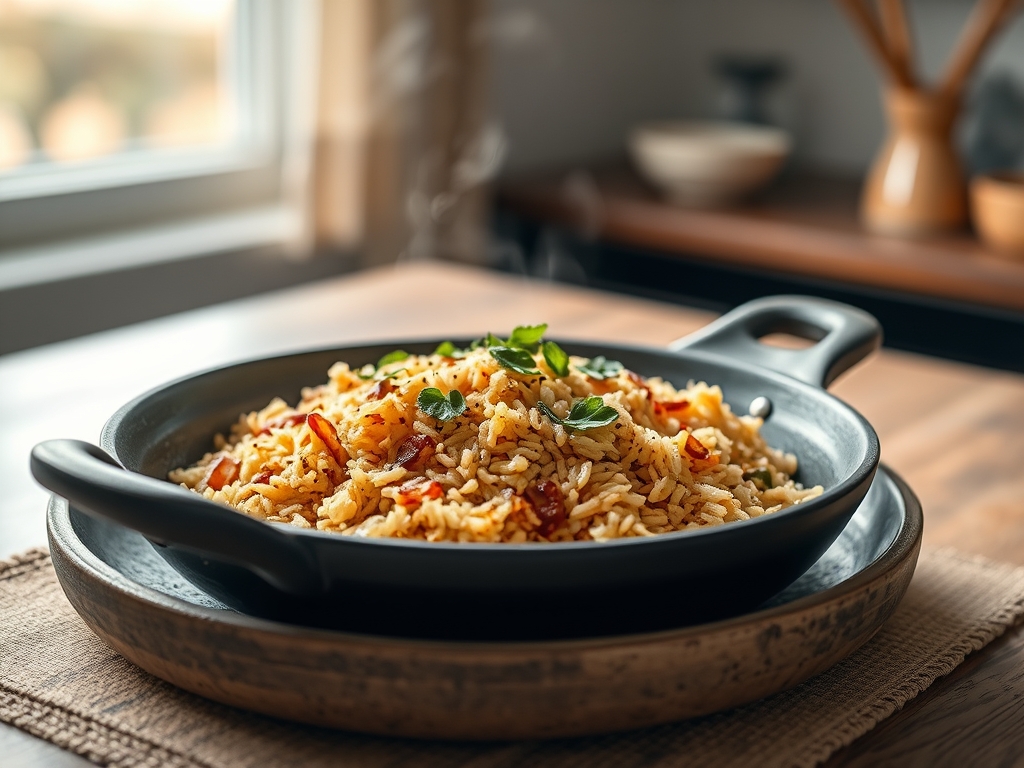
Referencing the Masterclass photo above, notice the distinct separation of grains. If your dish looks like a uniform brown mass, you have over-mixed or used too much liquid. The photo shows vibrant orange from the carrots and bright green from the onions. If your colors are dull, you have overcooked the vegetables. To achieve that professional sheen, ensure your oil-to-rice ratio is precise. If the rice looks matte or dry, it will lack the viscous mouthfeel associated with high-quality fried rice. If you see black flecks that aren't pepper, your garlic has burned; reduce the heat during the aromatic phase next time.
THE DEEP DIVE
Macro Nutrition Profile:
A standard serving of this One Skillet Fried Rice provides approximately 350 calories, 12g of protein, 45g of carbohydrates, and 14g of healthy fats. It is a balanced fuel source designed for rapid energy recovery.
Dietary Swaps:
- Vegan: Replace the eggs with crumbled extra-firm tofu seasoned with turmeric and black salt (kala namak) for a sulfurous, egg-like profile.
- Keto: Swap the rice for riced cauliflower. Note that cauliflower releases significant moisture, so you must sauté it longer to achieve the correct texture.
- Gluten-Free: Use Tamari or liquid aminos in place of traditional soy sauce.
Meal Prep & Reheating Science:
To maintain the molecular structure during reheating, avoid the microwave if possible. Reheat in a skillet with a teaspoon of water and a lid. The steam will hydrate the interior of the grain while the pan heat maintains the exterior crispness. If using a microwave, cover with a damp paper towel to prevent the starch from turning into a crystalline, hard shard.
THE KITCHEN TABLE
Why is my fried rice always mushy?
You are likely using fresh rice or overcrowding the pan. Fresh rice has too much internal moisture. Use day-old, refrigerated rice to ensure the grains stay separate and firm during the high-heat frying process.
Can I use brown rice for this recipe?
Absolutely. Brown rice provides a sturdier bran layer which actually holds up better under high heat. It adds a nutty flavor profile and increases the fiber content, though it may require a slightly longer searing time.
What is the best oil to use?
Avoid butter or extra virgin olive oil for the searing phase. Use oils with high smoke points like grapeseed, peanut, or canola. These allow you to reach the temperatures necessary for the Maillard reaction without scorching.
How do I get that "smoky" restaurant flavor?
That flavor is "Wok Hei" or the breath of the wok. It comes from the combustion of oil droplets in the air. At home, you can mimic this by ensuring your skillet is screaming hot before adding the ingredients.