Listen to the roar of the atmospheric burner as it transitions from a dormant hum to a localized jet engine. This is not merely cooking; it is a high-stakes engineering feat where the margin between culinary transcendence and carbonized failure is measured in milliseconds. We are discussing the infrastructure of low-latency Quick Egg Fried Rice. To the uninitiated, it looks like a simple stir-fry. To the expert auditor, it is a masterclass in thermal shock application and moisture management. You are looking for that elusive "wok hei," the breath of the wok that occurs when oil droplets atomize and catch fire in mid-air. This process requires a precise ratio of starch to lipid and a relentless commitment to high-velocity agitation. If your grains are clumping, your infrastructure has failed. If your eggs are rubbery, your timing is lagging. We are here to optimize your kitchen workflow, ensuring that every grain of rice is an individual vessel of savory, toasted perfection. Prepare for a systemic overhaul of your stir-fry protocols.
THE DATA MATRIX
| Metric | Specification |
|---|---|
| Prep Time | 10 Minutes |
| Execution Time | 5 Minutes |
| Yield | 2 Servings |
| Complexity | 4 / 10 |
| Estimated Cost per Serving | $1.15 USD |
THE GATHERS
Ingredient Protocol:
- 400g / 3 cups Pre-cooked Jasmine Rice (Chilled)
- 3 Large Eggs (Room temperature)
- 30ml / 2 tbsp Neutral Oil (Grape seed or Canola)
- 15ml / 1 tbsp Light Soy Sauce
- 5ml / 1 tsp Toasted Sesame Oil
- 50g / 0.5 cup Scallions (Finely biased)
- 2g / 0.5 tsp White Pepper
- 1g / 0.25 tsp MSG (Optional flavor enhancer)
Section A: Ingredient Quality Audit:
Sub-par raw materials are the primary cause of systemic dish failure. If your rice is freshly boiled and steaming, it contains too much surface moisture. This leads to steam-clumping rather than frying. The technical fix is to spread the rice on a sheet pan and place it in front of a high-speed fan for 20 minutes to dehydrate the exterior. If your soy sauce tastes like salt water without depth, you are likely using a chemically hydrolyzed vegetable protein. Switch to a traditionally brewed soy sauce to ensure a piquant and complex profile. Finally, if your eggs lack vibrancy, check the yolk color. Pale yolks often indicate a lack of carotenoids in the feed; high-quality pasture-raised eggs provide the necessary golden hue for aesthetic dominance.
THE MASTERCLASS
1. The Grain Dissociation Phase
Begin by placing your chilled rice into a large mixing bowl. Use a bench scraper or your gloved hands to break apart any large clusters until every grain is autonomous. This prevents cold spots during the high-heat phase.
Pro Tip: This is a physical preparation for the Maillard reaction. By increasing the surface area of each grain before it hits the heat, you ensure even browning and prevent the center of the dish from remaining cold while the exterior burns.
2. The Lipid Saturation
Place your wok or high-walled saucier over the highest possible heat. Add the neutral oil and swirl until it reaches its smoke point. You should see wisps of vapor rising from the surface.
Pro Tip: Using a digital scale to measure your oil ensures consistency. Too much oil creates a viscous, greasy mouthfeel; too little oil prevents the rice from sliding, leading to protein adhesion on the pan surface.
3. The Aerated Egg Suspension
Whisk your eggs vigorously to aerate the proteins, then pour them into the center of the vortex. They should puff up instantly. Before they fully set, add the rice directly on top of the liquid egg.
Pro Tip: This technique, known as "Silver Covered Gold," allows the egg to coat the rice grains as they fry. The rapid expansion of the egg proteins creates a protective barrier that prevents the rice from sticking to the steel.
4. The High-Velocity Agitation
Use a wide spatula to toss the rice and egg mixture continuously. This is the "Low Latency" phase. Do not let the rice sit for more than three seconds. Flip and toss to ensure every grain is exposed to the radiant heat of the pan walls.
Pro Tip: Professional chefs use a rhythmic "push and pull" motion with the wok. This maximizes air contact, which helps to render out any remaining moisture and create that signature smoky aroma.
5. The Umami Infusion
Drizzle the soy sauce and sesame oil around the perimeter of the wok rather than directly onto the rice. This allows the sauce to deglaze the hot metal and caramelize before it hits the grains. Toss in the scallions and white pepper in the final 30 seconds.
Pro Tip: Adding liquids to the edges of the pan causes immediate evaporation of water content, leaving behind concentrated flavor solids that infuse the rice without making it soggy.
Section B: Prep & Timing Fault-Lines:
The most common human error is "crowding the pan." If you attempt to cook four servings in a standard residential wok, the thermal mass of the cold rice will drop the pan temperature below the frying threshold. This results in a "stewed" texture. Audit your batch sizes; never exceed 500g of rice per cooking cycle. Another fault-line is the "late egg." If the egg is added after the rice, it will coat the grains in a slimy film that never fully dehydrates, ruining the structural integrity of the Quick Egg Fried Rice.
THE VISUAL SPECTRUM
Section C: Thermal & Visual Troubleshooting:
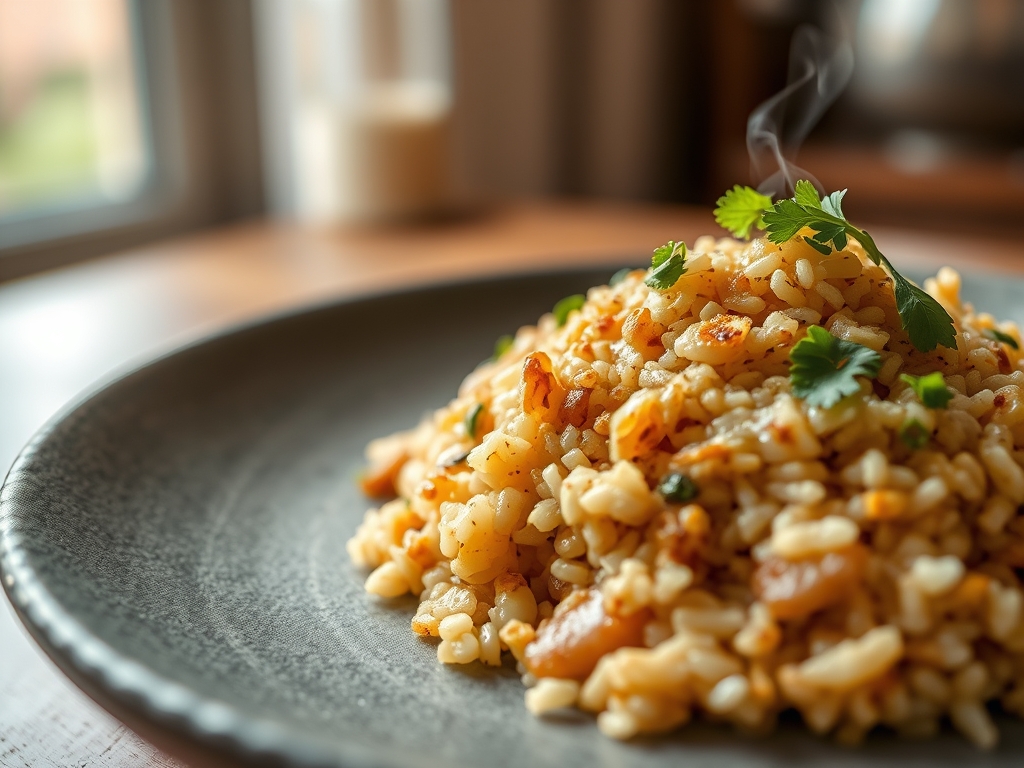
Examine the Masterclass photo above. Note the distinct separation of grains and the flecks of bright green scallion that have not yet wilted into brown mush. If your dish looks dull or grey, you likely over-mixed the soy sauce or used a dark variety intended for braising. If you see uneven browning (some grains white, some dark), your agitation speed was too low. The goal is a uniform golden-toasted hue. If the eggs look brown and crispy rather than yellow and soft, your initial oil temperature was too high or your rice addition was delayed. The visual cue for success is a slight "shimmer" on the grains, indicating a perfect micro-layer of oil without excess pooling at the bottom of the bowl.
THE DEEP DIVE
Macro Nutrition Profile:
A standard serving of this Quick Egg Fried Rice provides approximately 450 calories. The breakdown is roughly 65g of carbohydrates, 12g of protein, and 15g of healthy fats. The high glycemic index of the white rice provides immediate energy, while the lipids in the egg yolks slow down digestion for sustained satiety.
Dietary Swaps:
- Vegan: Replace the eggs with crumbled extra-firm tofu seasoned with black salt (Kala Namak) for a sulfurous aroma.
- Keto: Substitute the rice with riced cauliflower. Note that cauliflower has a much higher water content and requires a longer "dry-fry" phase before adding oil.
- GF: Ensure your soy sauce is replaced with Tamari or liquid aminos to avoid gluten-based thickeners.
Meal Prep & Reheating Science:
To maintain the molecular structure during reheating, avoid the microwave if possible. Microwaves vibrate water molecules, which can make the rice rubbery. Instead, use a skillet with a teaspoon of water and a lid. This creates a small amount of steam to re-hydrate the starch crystals without compromising the toasted exterior.
THE KITCHEN TABLE
Why is my fried rice always mushy?
Mushiness is usually caused by using warm, freshly cooked rice. The starch is still gelatinized and full of moisture. Always use day-old, refrigerated rice to ensure the grains stay separate and firm during the high-heat frying process.
Can I use butter instead of oil?
Butter has a low smoke point and contains water and milk solids that will burn at the temperatures required for fried rice. If you want a buttery flavor, add a small cold knob of butter at the very end of cooking.
What is the best type of rice to use?
Long-grain Jasmine rice is the gold standard. It has a lower amylopectin content than short-grain rice, meaning it is less sticky. This structural property is essential for achieving the individual grain separation required for professional-grade results.
Do I really need MSG?
MSG provides a concentrated "umami" punch that salt alone cannot replicate. While optional, it is the secret behind the addictive quality of restaurant-style rice. A tiny pinch goes a long way in balancing the salty and savory notes.