The kitchen is no longer a sanctuary; it is a high-velocity test chamber where the humble brassica undergoes a violent, thermal transformation. We are moving past the days of limp, waterlogged stalks that haunt the nightmares of elementary school cafeterias. Today, we harness the power of forced convection to achieve the holy grail of vegetable cookery: Air Fryer Broccoli. Imagine the florets as miniature lightning rods, catching the intense heat to create shattered, carbonized edges while the core remains vibrant and snappy. This is not just cooking; it is an exercise in structural integrity and Maillard-induced euphoria. The air fryer acts as a miniature wind tunnel, stripping moisture from the surface at a rate that traditional ovens simply cannot match. Within minutes, you achieve a level of crispness that feels illegal. The smell of toasted sulfur and caramelizing sugars fills the air, signaling that the cellular walls of the broccoli have successfully surrendered to the heat. Prepare yourself for a texture that is simultaneously airy, crunchy, and deeply savory.
THE DATA MATRIX
| Metric | Specification |
|---|---|
| Prep Time | 8 Minutes |
| Execution Time | 10 Minutes |
| Yield | 4 Servings |
| Complexity (1-10) | 3 |
| Estimated Cost per Serving | $0.85 |
THE GATHERS
Ingredient Protocol:
- 500g / 1.1 lbs Fresh Broccoli Florets (Uniformly trimmed)
- 30ml / 2 tbsp Extra Virgin Olive Oil (High polyphenol count preferred)
- 5g / 1 tsp Kosher Salt
- 3g / 0.5 tsp Freshly Cracked Black Pepper
- 2g / 0.5 tsp Garlic Powder (Dehydrated for high-heat stability)
- 15ml / 1 tbsp Fresh Lemon Juice (For post-thermal brightness)
- 20g / 0.25 cup Finely Grated Parmigiano-Reggiano (Optional)
Section A: Ingredient Quality Audit:
The primary failure point in Air Fryer Broccoli is the moisture content of the raw material. If your broccoli feels rubbery or "bendy" before you even begin, the cellular structure has already begun to collapse. To fix this, submerge the stalks in an ice-water bath for fifteen minutes to re-pressurize the vacuoles through osmosis. Ensure you dry the florets with surgical precision using a lint-free kitchen towel or a high-speed salad spinner. Residual surface water is the enemy of the Maillard reaction; it creates a localized steam jacket that prevents the oil from reaching the smoke point necessary for charring. Furthermore, avoid pre-minced garlic in oil. The moisture in the jar will cause the garlic to turn bitter and acrid in the high-velocity air stream. Stick to dry spices for the initial roast and save the fresh aromatics for a post-cook toss in a stainless steel saucier.
THE MASTERCLASS
1. The Precision Cut and Calibration
Begin by breaking down the head into uniform florets. Use a sharp chef knife to ensure clean incisions that do not bruise the vascular tissue. Aim for pieces that are roughly 3 centimeters in diameter. Use a digital scale to ensure your batches are consistent in weight; overloading the basket is a recipe for uneven thermal distribution.
Pro Tip: Uniformity is the cornerstone of predictable thermodynamics. If the florets vary in size, the small ones will carbonize into ash before the larger stems reach a palatable tenderness. Use a bench scraper to quickly transfer your calibrated florets into a large mixing bowl.
2. The Emulsification and Coating Phase
In your mixing bowl, combine the broccoli with the olive oil, salt, pepper, and garlic powder. Use your hands or a silicone spatula to massage the oil into every crevice of the floret. You want a thin, viscous film over the entire surface area. This oil acts as a heat transfer medium, allowing the hot air to "fry" the surface rather than just drying it out.
Pro Tip: Adding a tiny pinch of baking soda to the seasoning mix can accelerate the Maillard reaction by raising the pH level of the surface. This results in a deeper, more complex browning in a shorter timeframe.
3. The Thermal Blast
Preheat your air fryer to 200 degrees Celsius (400 degrees Fahrenheit) for at least five minutes. This ensures the heating element and the basket walls are radiating infrared heat immediately upon contact. Arrange the broccoli in a single layer. Do not stack them. If they are crowded, they will steam, not sear.
Pro Tip: Slide the basket into the chamber and set the timer for 10 minutes. At the halfway mark, perform a vigorous "basket shake" to redistribute the florets. This ensures the high-velocity air reaches the underside of the branches.
4. The Piquant Finish
Once the timer expires and the florets show dark, charred edges, transfer them immediately to a clean bowl. While they are still screaming hot, hit them with the lemon juice and the grated cheese. The residual heat will slightly melt the cheese, creating a savory crust that clings to the charred bits.
Pro Tip: Use a small saucier to warm a tablespoon of butter and a dash of chili flakes if you want to infuse a secondary layer of flavor. The fat will carry the piquant notes across the palate more effectively than dry spices alone.
Section B: Prep & Timing Fault-Lines:
Timing errors usually stem from a lack of preheating. If you place the broccoli in a cold unit, the slow ramp-up in temperature allows moisture to leak out of the vegetable, resulting in a soggy texture. Another common fault-line is the "set it and forget it" mentality. Air fryers are aggressive. A sixty-second variance can be the difference between "perfectly charred" and "inedible charcoal." Always use a digital timer and stay within earshot of the fan's hum. If you notice a faint wispy smoke, the oil has reached its flash point; reduce the temperature by 10 degrees immediately.
THE VISUAL SPECTRUM
Section C: Thermal & Visual Troubleshooting:
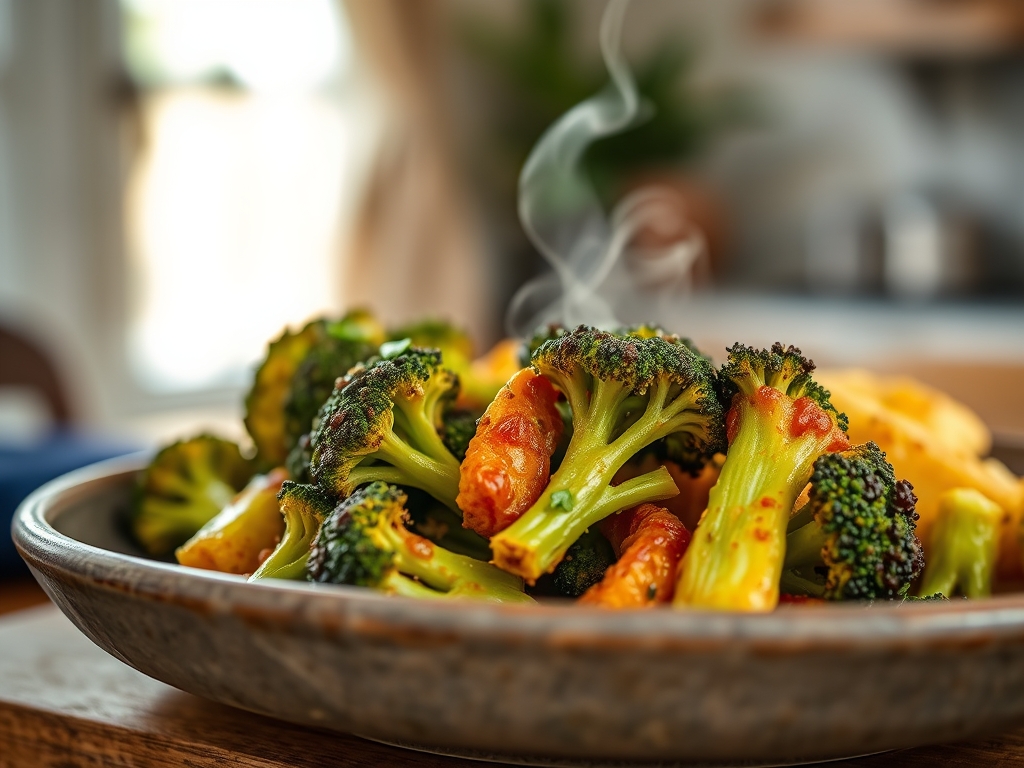
Examine the Masterclass photo above. Note the "leopard spotting" on the tips of the florets. This is the visual cue for success. If your broccoli looks pale or uniform in color, you have failed to aerate the basket properly or your temperature was too low. If the stems look shriveled and grey, you have overcooked the interior before the exterior could crisp. This usually happens when the florets are too small. Conversely, if the tips are black but the stems are raw, your temperature was too high. The goal is a gradient: dark brown tips, bright green branches, and a tender, ivory-colored core. If the color looks dull, a quick spray of high-quality oil post-cook can help "revive" the visual luster and improve mouthfeel.
THE DEEP DIVE
From a macro perspective, Air Fryer Broccoli is a nutritional powerhouse. A standard 150g serving provides roughly 50 calories, 3g of protein, and 5g of fiber. It is a dense source of Vitamin C and K, though some Vitamin C is lost during high-heat exposure. To maintain the molecular structure and prevent the broccoli from becoming mushy during reheating, avoid the microwave. Instead, toss the leftovers back into the air fryer at 180 degrees Celsius for 3 minutes. This will re-crisp the exterior without obliterating the internal moisture. For vegan adaptations, swap the cheese for nutritional yeast to maintain that umami profile. For keto enthusiasts, increase the oil or add toasted macadamia nuts for a fat-dense crunch.
THE KITCHEN TABLE
Why is my broccoli soggy instead of crispy?
This is typically caused by overcrowding the basket or failing to dry the broccoli after washing. Surface moisture creates steam, which prevents the oil from reaching the temperatures required for a crisp finish. Cook in smaller batches for optimal airflow.
Can I use frozen broccoli for this method?
Yes, but you must adjust your expectations. Frozen broccoli has compromised cell walls due to ice crystallization. Air fry it directly from frozen at a higher temperature (210C) to evaporate the ice quickly, but it will never be as snappy as fresh.
What is the best oil to use?
Use an oil with a medium-high smoke point like avocado oil or refined olive oil. Extra virgin olive oil works well at 200C, but avoid unrefined nut oils, which will smoke and turn bitter under the high-velocity fan.
How do I prevent the garlic powder from burning?
Ensure the garlic powder is thoroughly mixed with the oil before it hits the broccoli. The oil acts as a heat shield. If you find it still burns, try adding the spices halfway through the cooking cycle during the basket shake.