Stop thinking of your kitchen as a domestic sanctuary and start treating it like a high-output thermal processing plant. We are here to talk about the structural integrity of the starch granule. When you crave Air Fryer Potato Wedges, you aren't just looking for a side dish; you are demanding a textural miracle. You want a glass-like exterior that shatters upon impact, giving way to a fluffy, cloud-like interior that has undergone perfect gelatinization. Most home cooks fail because they treat the potato like a passive vegetable rather than a complex carbohydrate matrix. They throw damp tubers into a lukewarm basket and wonder why they end up with a sad, limp pile of steamed starch. We do not accept mediocrity here. We are optimizing for maximum surface area and rapid moisture evaporation. By leveraging high-velocity convection, we can achieve a Maillard reaction that rivals any deep-fryer without the oil-logged caloric density. This is about engineering the perfect bite through heat transfer and moisture management. Welcome to the audit.
THE DATA MATRIX
| Metric | Specification |
|---|---|
| Prep Time | 15 Minutes |
| Execution Time | 20 Minutes |
| Yield | 4 Servings |
| Complexity | 3/10 |
| Estimated Cost per Serving | $0.85 |
THE GATHERS
Ingredient Protocol:
- 900g / 2 lbs Russet Potatoes (high starch content is non-negotiable)
- 30ml / 2 tbsp Extra Virgin Olive Oil
- 5g / 1 tsp Smoked Paprika
- 5g / 1 tsp Garlic Powder
- 3g / 0.5 tsp Onion Powder
- 6g / 1 tsp Kosher Salt
- 2g / 0.5 tsp Cracked Black Pepper
- 15g / 1 tbsp Cornstarch (the secret for structural reinforcement)
Section A: Ingredient Quality Audit:
If your potatoes are sprouting or feel soft, your starch-to-sugar ratio is compromised. Old potatoes convert starch into sugar; this leads to premature browning before the interior is cooked. If you find yourself with waxy potatoes like Red Bliss, abort the mission. Waxy potatoes contain too much moisture and will never achieve the desired "shatter" effect. If your spices are dull or clumpy, they have oxidized. To fix this, infuse your spices into the oil before coating the potatoes. This bloom technique wakes up the volatile oils and ensures an even distribution of flavor across the entire batch.
THE MASTERCLASS
Step-by-Step Execution:
1. The Geometric Precision Cut
Using a sharp chef knife and a stable cutting board, bisect your potatoes lengthwise. Continue dividing until you have uniform wedges. Aim for a thickness of roughly 2cm at the widest point. Uniformity is the backbone of consistent thermal penetration.
Pro Tip: Use a digital scale to weigh your wedges. Ensuring they are of similar mass prevents the smaller pieces from carbonizing while the larger pieces remain raw.
2. The Starch Extraction Soak
Submerge your wedges in a bowl of ice-cold water for at least 10 minutes. This removes excess surface starch that would otherwise become gummy.
Pro Tip: Agitate the water vigorously. You are looking for the water to turn cloudy. Use a bench scraper to easily move your cut potatoes from the board to the water bath without losing structural integrity.
3. Dehydration and Surface Prep
Drain the potatoes and pat them bone-dry with lint-free towels. Any residual moisture will turn to steam in the air fryer, preventing the Maillard reaction.
Pro Tip: After towel drying, let them sit on a wire rack for 5 minutes. This allows for evaporative cooling, which further dries the surface skin for a superior crunch.
4. The Emulsification Coating
In a large stainless steel bowl, whisk the oil, spices, and cornstarch. Toss the wedges until every millimeter is coated in a thin, viscous film. The cornstarch acts as a secondary crust builder.
Pro Tip: Use a saucier if you decide to melt butter or infuse aromatics into your oil first. The rounded bottom allows for better whisking of the dry spices into the fat.
5. High-Velocity Convection Processing
Preheat your air fryer to 200C / 400F. Arrange the wedges in a single layer. Do not overcrowd. Airflow is your primary cooking medium; if you block it, you are just steaming.
Pro Tip: Set a timer for the halfway mark. Use silicone-tipped tongs to flip each wedge. This ensures the contact points with the basket do not become soggy.
Section B: Prep & Timing Fault-Lines:
The most common human error is the "Cold Basket Syndrome." If you do not preheat the air fryer, the potatoes sit in a warming environment that leeches moisture before the crust can set. This results in a leathery texture. Furthermore, if you skip the drying phase, the steam released in the small chamber will drop the internal temperature of the fryer, extending the cook time and ruining the starch retrogradation process. Always use a calibrated thermometer to ensure your appliance is actually hitting the target 200C.
THE VISUAL SPECTRUM
Section C: Thermal & Visual Troubleshooting:
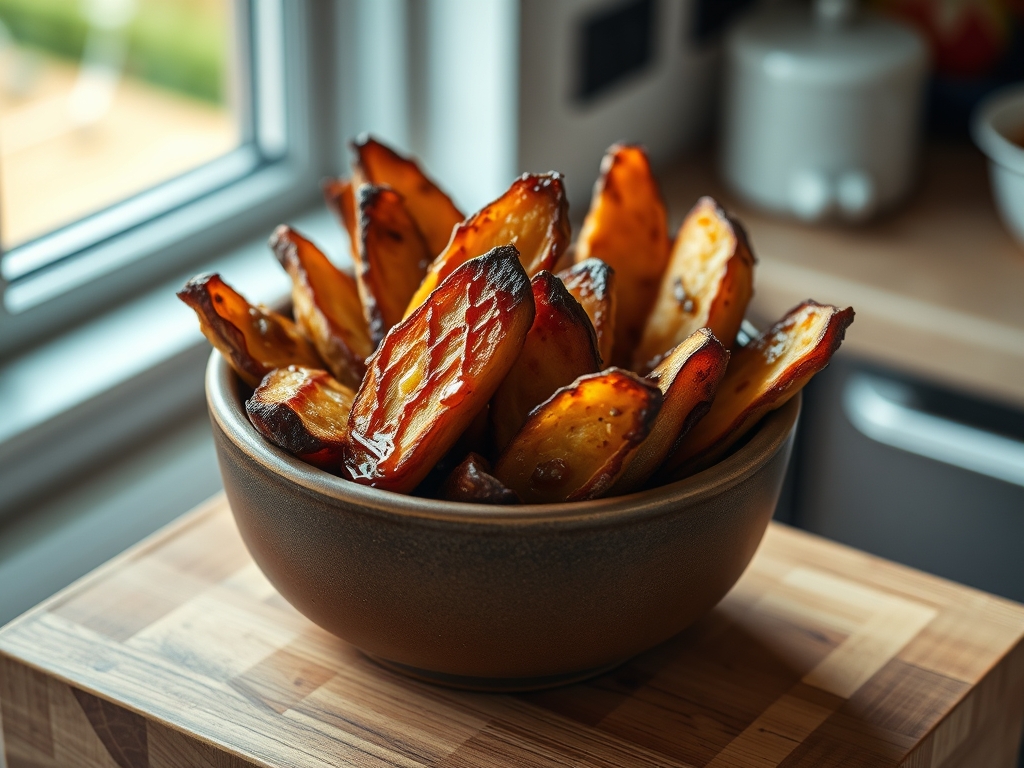
Referencing the Masterclass photo, your wedges should exhibit a deep, golden-amber hue with visible "blisters" on the surface. If your wedges look pale and matte, you lacked sufficient oil or the temperature was too low. If they are dark brown but hard in the center, your wedges were cut too thick for the high heat. If the edges are burnt but the faces are white, you overcrowded the basket, forcing the air to move only around the perimeter of the pile. The goal is a piquant aroma and a surface that looks like etched topographical maps.
THE DEEP DIVE
Macro Nutrition Profile:
Per serving, these wedges typically contain 180 calories, 7g of fat, 28g of carbohydrates, and 3g of fiber. By utilizing the air fryer, you reduce the fat content by nearly 70 percent compared to traditional deep-frying methods.
Dietary Swaps:
- Vegan: This recipe is naturally vegan. Ensure your spices are not blended with dairy-based anti-caking agents.
- Keto: Potatoes are high-carb. Substitute with Daikon radish or Jicama, though the starch retrogradation will differ significantly.
- GF: This recipe is gluten-free. Double-check that your smoked paprika is certified GF.
Meal Prep & Reheating Science:
To maintain molecular structure when reheating, avoid the microwave at all costs. Microwaves vibrate water molecules, which will turn your crisp crust into a soggy mess. Instead, return the wedges to the air fryer at 180C for 3 to 4 minutes. This flashes the surface moisture and restores the "crunch" through secondary dehydration.
THE KITCHEN TABLE
Why are my wedges soggy?
You likely skipped the soaking or drying phase. Surface moisture is the enemy of crispness. Ensure the potatoes are bone-dry before the oil hits them. Also, do not stack the wedges; they need breathing room to aerate properly.
Can I use sweet potatoes?
Yes, but sweet potatoes have higher sugar content and lower starch. They will brown much faster and require a lower temperature (around 185C) to prevent the sugars from scorching before the interior is fully rendered.
Do I really need cornstarch?
While not mandatory, cornstarch acts as a desiccant. It absorbs any microscopic surface moisture and fries into a thin, crispy shell. It is the difference between a "good" wedge and a "professional" structural masterpiece.
How do I get the spices to stick?
The oil is your delivery vehicle. By mixing the spices into the oil before coating the potatoes, you create a suspension that clings to the surface area. This ensures every bite is infused with uniform flavor.