Forget the splattered grease and the scorched fingertips of the traditional stovetop skirmish. We are entering the era of localized convection dominance. When you deploy Air Fryer Bacon, you are not just cooking breakfast; you are managing a high speed thermal exchange designed to achieve the perfect ratio of rendered lipids to structural protein. The air fryer operates as a miniature wind tunnel, circulating superheated air at velocities that force moisture to evaporate almost instantly. This rapid dehydration triggers the Maillard reaction with surgical precision, transforming pale pork belly into shards of mahogany gold. There is no standing over a pan, no dodging ballistic droplets of fat, and no uneven hot spots. Instead, you get a uniform crunch that resonates through the cranium. This is the infrastructure of the ultimate smokehouse strip. We are auditing the very essence of porcine perfection, stripping away the inefficiency of the frying pan and replacing it with the aerodynamic brilliance of modern kitchen engineering. Prepare for a total recalibration of your morning protein protocol.
THE DATA MATRIX
| Metric | Specification |
|---|---|
| Prep Time | 2 Minutes |
| Execution Time | 8 to 12 Minutes |
| Yield | 4 Servings |
| Complexity (1-10) | 2 |
| Estimated Cost per Serving | $1.50 USD |
THE GATHERS
Ingredient Protocol:
- 450g / 1 lb Thick-cut Smoked Bacon (approx. 8 to 10 strips)
- 5ml / 1 tsp Maple Syrup (optional for glaze)
- 2g / 0.5 tsp Coarsely Ground Black Pepper
- 1g / 0.25 tsp Smoked Paprika (for depth)
Section A: Ingredient Quality Audit:
The primary failure point in Air Fryer Bacon is the selection of sub-par, water-injected commodity pork. If your bacon shrinks by fifty percent and sits in a pool of gray liquid, you have fallen victim to "pumped" meat. This excess moisture prevents the fat from reaching the critical temperature required to render effectively. To fix this, source dry-cured bacon from a reputable butcher. If you are stuck with supermarket varieties, pat the strips excessively dry with lint-free towels before loading the basket. Another common fault is uneven thickness. If the strips vary, the thinner sections will carbonize while the thicker fat remains viscous and unappealing. Use a sharp chef knife to trim any dangling "tails" of fat that might catch the air current and burn prematurely.
THE MASTERCLASS
Step-by-Step Execution:
1. Thermal Calibration and Loading
Arrange the strips in a single layer within the air fryer basket. Do not allow the edges to overlap significantly, as this creates "steam zones" where the fat cannot properly render. If your basket is circular, you may need to halve the strips using a bench scraper or kitchen shears to ensure maximum surface area exposure to the airflow.
Pro Tip: Use a digital scale to ensure each batch is consistent in weight. The physics of the air fryer depend on the volume of air relative to the mass of the food. Overloading the basket restricts the vortex, leading to soggy results.
2. The Convection Phase
Set the unit to 200C / 400F. Initiate the cycle for an initial duration of 8 minutes. Unlike an oven, the air fryer does not require a lengthy preheat because the heating elements are in close proximity to the protein. The goal here is to infuse the meat with rapid heat to jumpstart the lipid breakdown.
Pro Tip: If you notice excessive white smoke, it is likely the result of fat dripping onto the bottom heating element. A technical fix is to place a single slice of bread in the bottom of the outer drawer to absorb the liquid fat before it can reach its smoke point.
3. The Mid-Cycle Rotation
At the 5-minute mark, pause the unit. Use silicone-tipped tongs to flip each strip. This ensures that the underside, which receives less direct airflow, achieves the same level of crispness as the top. This is the moment to apply any piquant seasonings or glazes.
Pro Tip: If applying a maple glaze, use a small saucier to warm the syrup slightly before brushing. This lowers the viscosity and allows for a micro-thin coating that caramelizes without burning.
4. The Final Rendering Audit
Continue the cycle for the remaining 3 to 5 minutes. Monitor the strips closely through the viewing window if available. You are looking for a deep amber hue and a surface covered in tiny, active bubbles. This bubbling indicates that the internal moisture has been replaced by rendered fat.
Pro Tip: Use an instant-read thermometer if you are unsure of the "doneness" of thick-cut pieces. While we usually cook bacon by sight, the internal temperature should exceed 71C / 160F for food safety and optimal texture.
Section B: Prep & Timing Fault-Lines:
The most common human error is the "set it and forget it" fallacy. Air fryers are high-intensity tools; thirty seconds can be the difference between a masterpiece and a charcoal briquette. If your bacon is too hard, you have likely over-dehydrated the protein fibers. Reduce the temperature by 10 degrees for the next batch. If the fat is chewy, you have pulled the strips too early. The fat must reach a temperature where it becomes translucent and brittle upon cooling. Always account for carry-over cooking. The strips will continue to crisp for approximately sixty seconds after being removed from the heat source.
THE VISUAL SPECTRUM
Section C: Thermal & Visual Troubleshooting:
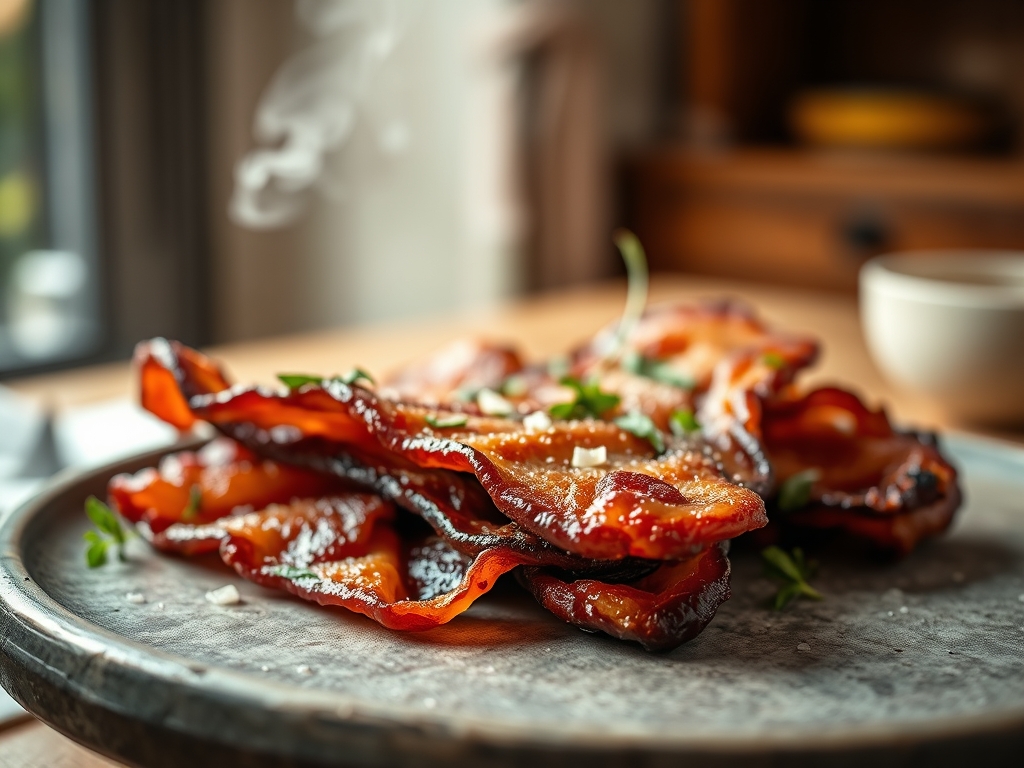
Look at the Masterclass photo above. Notice the uniform ripples and the lack of blackened edges. If your bacon looks "shriveled" or gray, the temperature was too low, causing the meat to boil in its own juices rather than fry. If the color is uneven, with white spots of unrendered fat, your air circulation was blocked by overcrowding. To achieve that specific "smokehouse" sheen, the strips must be suspended in the air stream. If the bacon appears dull, it is likely too dry. A light spray of neutral oil can actually help the rendering process start faster by increasing the thermal conductivity of the surface.
THE DEEP DIVE
Macro Nutrition Profile:
A standard serving of two thick-cut strips contains approximately 110 calories, 9g of protein, and 8g of fat. By using an air fryer, you actually reduce the final fat content compared to pan-frying, as the grease drains away from the meat into the reservoir below rather than soaking back into the protein.
Dietary Swaps:
For a Keto profile, avoid all sugar-based glazes. For a Vegan alternative, use thin strips of tempeh or king oyster mushrooms brushed with liquid smoke and soy sauce to deglaze the earthy flavors. For Gluten-Free requirements, simply ensure your bacon brand does not use barley-based smoke flavorings.
Meal Prep & Reheating Science:
To maintain the molecular structure during reheating, avoid the microwave, which turns the fat rubbery. Instead, return the strips to the air fryer at 180C / 350F for exactly 2 minutes. This re-activates the lipids and restores the structural integrity of the protein matrix without further darkening the exterior.
THE KITCHEN TABLE
Why is my air fryer bacon smoking?
This occurs when rendered fat hits the hot catch tray. Place a slice of bread or a tablespoon of water in the bottom drawer to stabilize the temperature of the drippings and prevent the fat from reaching its smoke point.
Can I cook frozen bacon strips?
Yes, though it is not optimal for texture. Increase the time by 4 minutes and use tongs to separate the strips once they thaw sufficiently during the first half of the cycle to ensure even airflow.
How do I get the bacon extra crispy?
The secret is a light dusting of cornstarch or baking powder before cooking. This creates micro-fissures on the surface that trap air, leading to an amplified crunch that mimics the texture of deep-fried pork rinds.
Does the thickness of the cut matter?
Absolutely. Thin-cut bacon requires a lower temperature (190C / 375F) and less time (6-7 minutes) to prevent burning. Thick-cut is the gold standard for air frying as it withstands the high-velocity heat without disintegrating.