Forget everything you know about the soggy, sulfurous brassica of your childhood school cafeteria. We are entering the era of high-velocity convection where the humble floret undergoes a violent, beautiful metamorphosis. This is not just cooking; it is an architectural overhaul of a vegetable. Air Fryer Cauliflower represents the pinnacle of home-kitchen engineering, utilizing a rapid-circulation heating element to achieve a level of crispness that once required a vat of bubbling oil. As the hot air strips away surface moisture, the natural sugars within the vegetable begin to caramelize, creating a crust that is both savory and structurally sound. We are looking for that perfect intersection of a tender, buttery core and an exterior that shatters upon impact. The energy in the kitchen shifts the moment those florets hit the basket. It is a symphony of sizzling lipids and the intoxicating aroma of toasted garlic. If you are still steaming your vegetables, you are living in the culinary dark ages. It is time to upgrade your infrastructure and embrace the heat.
THE DATA MATRIX
| Metric | Specification |
|---|---|
| Prep Time | 10 Minutes |
| Execution Time | 15 Minutes |
| Yield | 4 Servings |
| Complexity | 3 / 10 |
| Estimated Cost per Serving | $1.15 USD |
THE GATHERS
Ingredient Protocol:
- 1 large head Cauliflower (approx. 800g / 1.75 lbs)
- 30ml / 2 tbsp Extra Virgin Olive Oil
- 5g / 1 tsp Smoked Paprika
- 3g / 0.5 tsp Garlic Powder
- 2g / 0.25 tsp Onion Powder
- 1g / 0.25 tsp Cayenne Pepper (optional for heat)
- 5g / 1 tsp Sea Salt
- 2g / 0.5 tsp Cracked Black Pepper
- 15ml / 1 tbsp Fresh Lemon Juice (for finishing)
Section A: Ingredient Quality Audit:
The primary failure point in Air Fryer Cauliflower is the moisture content of the raw material. If your cauliflower feels rubbery or shows dark "rust" spots, the cellular structure has already begun to collapse. Technical fix: If the vegetable is slightly wilted, submerge the florets in an ice bath for ten minutes to re-turgidize the cells; however, you must ensure they are bone-dry before seasoning. If using pre-cut bagged florets, they often carry excess humidity. Use a clean kitchen towel to aggressively pat them dry. For the oil, avoid low-smoke point fats like unrefined flax or butter, which will burn and turn acrid at the high velocities of an air fryer. Stick to stable monounsaturated fats to ensure a clean finish.
THE MASTERCLASS
1. The Precision Breakdown
Utilize a sharp chef knife or a bench scraper to remove the leaves and the woody stem. Break the head into uniform florets, ensuring each piece is roughly the size of a golf ball. Consistency is the primary directive here. If the sizes vary wildly, the smaller pieces will carbonize before the larger pieces reach the desired internal temperature.
Pro Tip: Cutting through the stem rather than the "curd" of the floret prevents the creation of "cauliflower "dust" which can burn in the bottom of the basket and create unwanted smoke.
2. The Lipid Coating Phase
Place your dry florets into a large stainless steel mixing bowl. Drizzle the olive oil over the vegetables and toss vigorously. You are looking for a thin, viscous film that covers every crevice. Once the oil is applied, sprinkle your pre-measured spices over the top. Use a digital scale to measure your spices for consistent flavor profiles across different batches.
Pro Tip: The oil acts as a heat transfer medium. Without a uniform coating, the hot air will simply dehydrate the vegetable rather than frying it, resulting in a leathery texture rather than a crisp one.
3. Thermal Calibration and Loading
Preheat your air fryer to 200C / 400F for at least three minutes. This ensures the heating element and the basket walls are radiating heat immediately upon contact. Arrange the seasoned florets in a single layer. Do not overcrowd the basket; air must be able to aerate and circulate around each individual piece to facilitate the Maillard reaction.
Pro Tip: Overloading the basket creates a "steaming" environment. If you have too much cauliflower, execute the cook in two separate cycles to maintain the integrity of the crust.
4. The Agitation Interval
Set the timer for 15 minutes. At the 7-minute mark, remove the basket and give it a violent shake. This redistributes the florets and ensures that the areas in contact with the basket floor are rotated. This is the moment to check for uneven browning and adjust your positioning if necessary.
Pro Tip: Rapid agitation prevents the spices from scorching on one side. This is the culinary equivalent of rendering out the moisture while locking in the structural fats.
5. The Piquant Finish
Once the timer expires and the florets exhibit a deep golden-brown hue, transfer them to a warm saucier or serving bowl. Immediately hit them with a fresh squeeze of lemon juice. The acidity will infuse the crust and cut through the richness of the oil, brightening the entire flavor profile.
Pro Tip: Adding the acid at the very end prevents the cauliflower from becoming mushy during the cooking process. The sudden drop in pH also helps to set the colors.
Section B: Prep & Timing Fault-Lines:
The most common human error is the "Cold Start" fallacy. Placing food into a cold air fryer results in an uneven cook where the interior becomes overdone before the exterior crisps. Always treat the air fryer like a precision laboratory instrument. Another fault-line is the "Wet Seasoning" error. If you add lemon juice or watery sauces before the air fry cycle, the moisture will prevent the temperature from rising above 100C until it evaporates, delaying the browning process and ruining the texture.
THE VISUAL SPECTRUM
Section C: Thermal & Visual Troubleshooting:
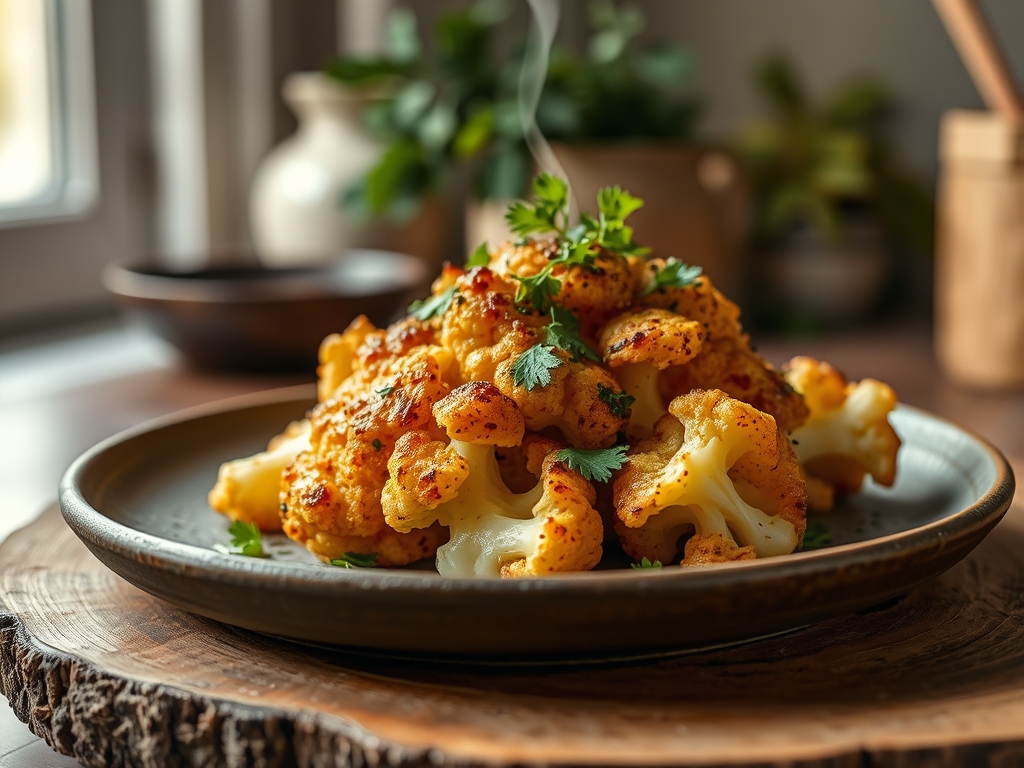
Look closely at the reference photo. You should see "charred" edges that appear almost black; this is not burnt, it is concentrated flavor. If your cauliflower looks pale or translucent, you have under-cooked it or used too much oil, which "boiled" the vegetable. If the spices look clumpy or "muddy," you did not toss the florets sufficiently in the mixing bowl. A perfect batch will have a matte finish with shimmering highlights where the oil has rendered into the surface. If the color is dull, a light spray of oil mid-way through the cook can help "reactivate" the browning process.
THE DEEP DIVE
From a macro perspective, Air Fryer Cauliflower is a nutritional powerhouse. A standard serving contains approximately 5g of fiber, 3g of protein, and a significant dose of Vitamin C and K, all while remaining under 150 calories depending on the lipid volume used.
For dietary adaptations, this protocol is naturally Gluten-Free. To make it Keto-compliant, ensure your spice blend does not contain hidden starches or sugars. For a Vegan variation, ensure you are using a high-quality plant-based oil rather than a ghee or butter substitute.
When it comes to meal prep, the molecular structure of cauliflower changes once cooled. The starches begin to retrograde, which can lead to a "soggy" texture. To reheat, never use a microwave; the microwave vibrates water molecules and will turn your masterpiece into mush. Instead, return the florets to the air fryer at 180C / 350F for 3 to 4 minutes to deglaze any surface moisture and restore the original crunch.
THE KITCHEN TABLE
Why is my cauliflower mushy instead of crunchy?
This usually stems from overcrowding the basket or failing to dry the cauliflower after washing. Excess moisture creates steam, which softens the cell walls. Ensure a single layer and bone-dry florets for maximum structural integrity.
Can I use frozen cauliflower for this recipe?
Yes, but increase the temperature to 205C / 400F and add 5 minutes to the clock. Frozen florets have higher water content; the extra heat is required to flash-evaporate the ice crystals before browning can occur.
What is the best way to add extra flavor?
After the cook is complete, toss the florets with freshly grated Parmesan or a drizzle of tahini. Adding these high-protein or high-sugar elements too early will cause them to burn before the cauliflower is fully cooked.
How do I prevent the spices from blowing off?
The oil is your adhesive. Ensure the florets are thoroughly coated in oil before adding dry spices. The oil creates a surface tension that locks the particulates in place against the high-velocity air currents of the fryer.